The University Grants Commission National Eligibility Test (UGC NET) is one of the most prestigious examinations for candidates who aspire to build a career in higher education and research. Conducted by the National Testing Agency (NTA), the examination determines the eligibility of candidates for the positions of Assistant Professor, Junior Research Fellowship (JRF), and admission to doctoral research programmes in various universities and colleges across India.
Every year, thousands of postgraduate students appear for the examination with the dream of entering the academic profession. However, many candidates begin their preparation without fully understanding the examination pattern, eligibility criteria, career opportunities, or the difference between qualifying for UGC NET and Junior Research Fellowship. This lack of clarity often results in ineffective preparation and unrealistic expectations.
Unlike many competitive examinations that primarily focus on objective knowledge, UGC NET evaluates conceptual understanding, analytical thinking, subject expertise, research aptitude, and teaching ability. Success therefore depends not only on memorising information but also on developing a deeper understanding of the chosen subject.
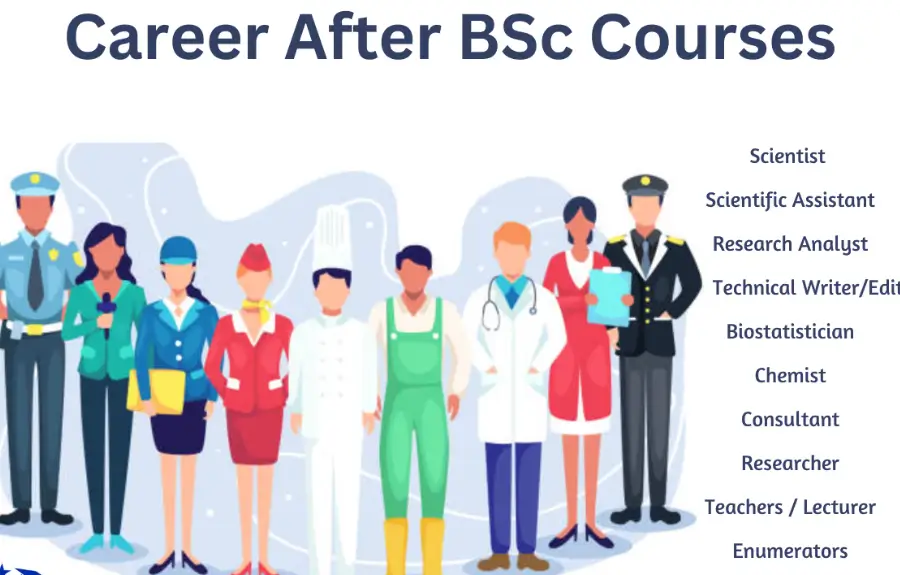
A career after qualifying UGC NET offers numerous opportunities. Candidates may become Assistant Professors, researchers, academic consultants, subject experts, content developers, educational administrators, or pursue doctoral studies leading to advanced research careers. Many government organizations, educational institutions, research centres, and public sector organizations also recognise UGC NET qualifications while recruiting subject specialists.
Whether your goal is teaching, research, or academic leadership, understanding the complete examination process is the first step toward successful preparation.
Many students assume that UGC NET is simply another competitive examination similar to recruitment tests conducted for government jobs. In reality, its objective is entirely different. The examination has been designed to identify candidates who possess the academic ability required for university-level teaching and research.
The qualification serves as an important benchmark for higher education institutions across the country. Universities and colleges frequently require UGC NET qualification while recruiting Assistant Professors because it demonstrates that a candidate possesses the required level of subject knowledge and academic aptitude.
Candidates qualifying for Junior Research Fellowship (JRF) receive additional opportunities to pursue full-time research with financial assistance, subject to the applicable guidelines and institutional requirements. This creates an excellent pathway for students planning to complete doctoral research and contribute to academic innovation.
The examination also evaluates Teaching Aptitude, Research Aptitude, reasoning ability, reading comprehension, communication skills, information and communication technology, higher education systems, and subject-specific knowledge. This broad assessment ensures that successful candidates possess both academic expertise and the ability to contribute effectively to higher education.
Understanding the purpose of the examination helps candidates appreciate why conceptual learning, analytical thinking, and consistent revision remain far more important than simple memorisation.
Before beginning preparation, candidates should carefully understand the UGC NET Eligibility Criteria. Many aspirants invest months preparing for the examination without verifying whether they satisfy the academic requirements specified in the official notification.
The examination is generally intended for candidates who have completed or are pursuing a Master's Degree in a recognized subject. The postgraduate qualification forms the academic foundation because UGC NET evaluates advanced subject knowledge rather than undergraduate-level concepts.
Candidates should select the subject for UGC NET according to their postgraduate specialization whenever applicable. Choosing the appropriate subject helps align preparation with previous academic learning while improving conceptual understanding.
Apart from educational qualifications, applicants should also carefully review the official notification regarding category-wise eligibility requirements, documentation, reservation policies, and other important conditions before submitting the application.
Students currently completing postgraduate education should remain aware of important deadlines and eligibility provisions applicable to final-year candidates. Understanding these requirements early helps avoid complications during the application process.
Another important aspect involves maintaining authentic educational documents because they become necessary during future recruitment, fellowship applications, university admissions, and document verification processes.
Candidates should always rely on official notifications published by the examination authority instead of depending exclusively on unofficial online sources.
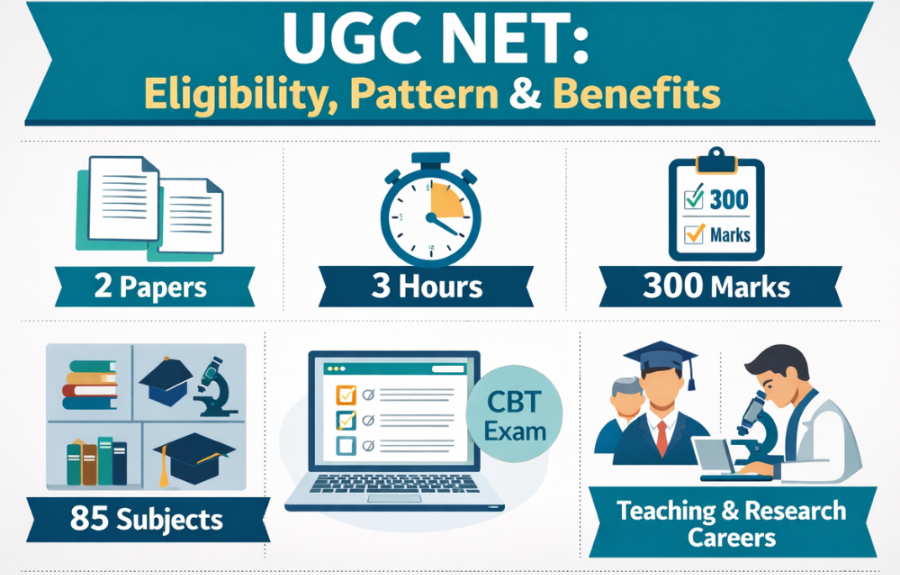
A clear understanding of the UGC NET Exam Pattern helps candidates organize their preparation more efficiently. Instead of studying randomly, aspirants can allocate sufficient time to every section according to its importance.
The examination generally consists of two papers conducted in a single session. The first paper evaluates general teaching and research aptitude rather than subject-specific knowledge. Topics typically include Teaching Aptitude, Research Aptitude, Reading Comprehension, Logical Reasoning, Data Interpretation, Information and Communication Technology, People and Environment, Communication, and the Higher Education System.
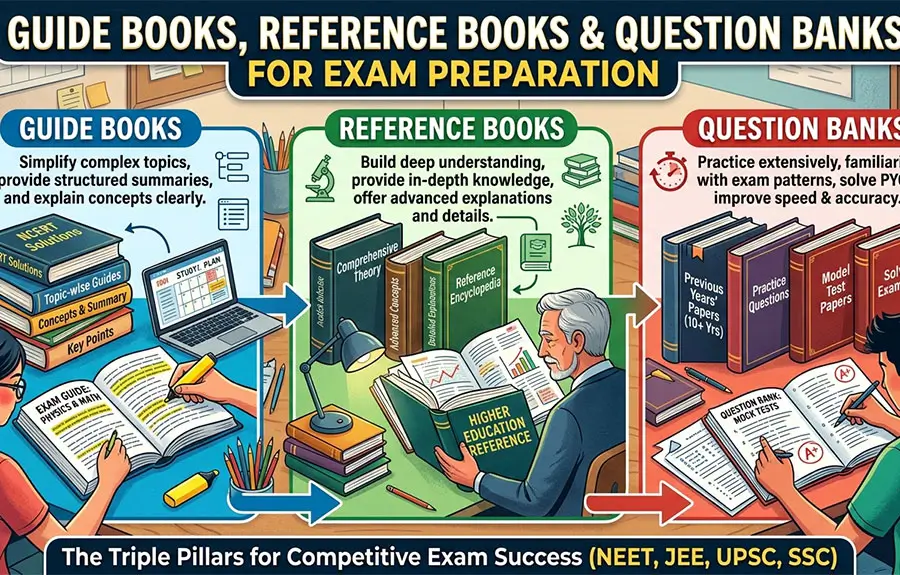
The second paper focuses entirely on the candidate's chosen subject. Since this paper evaluates advanced conceptual understanding, candidates should prepare systematically using postgraduate-level resources, standard reference books, previous year question papers, and consistent revision.
Unlike descriptive examinations, UGC NET follows an objective format, making speed and accuracy equally important. Solving mock tests regularly helps candidates improve time management while identifying weak areas requiring additional attention.
Previous year question papers deserve special importance because they reveal recurring concepts, examination trends, and the level of conceptual understanding expected from candidates. Instead of merely solving these papers, aspirants should analyse every incorrect answer carefully to strengthen their preparation.
A balanced preparation strategy covering both general aptitude and subject-specific knowledge significantly improves examination performance while reducing last-minute stress.
Qualifying the UGC NET examination opens the door to a wide range of academic and professional opportunities. While many candidates appear for the examination with the goal of becoming an Assistant Professor, the qualification offers benefits that extend far beyond classroom teaching. Universities, research institutions, educational organizations, government bodies, and private institutions increasingly value candidates who possess strong academic credentials and subject expertise.
One of the most popular career paths is becoming an Assistant Professor in universities, colleges, and higher education institutions. Teaching at the undergraduate and postgraduate levels allows candidates to build an academic career while contributing to research, curriculum development, and student mentoring. Along with classroom teaching, faculty members often participate in seminars, conferences, research publications, academic administration, and institutional development activities.
Candidates who qualify for the Junior Research Fellowship (JRF) gain an additional advantage by becoming eligible for financial assistance while pursuing advanced research. This opportunity enables scholars to concentrate on doctoral studies without depending entirely on external employment. Many successful researchers eventually become professors, scientists, policy researchers, consultants, or academic leaders after completing their research journey.
Apart from universities, qualified candidates also find opportunities in educational publishing companies, online learning platforms, examination organizations, think tanks, research centres, government departments, and private educational institutions. Subject experts are frequently recruited for curriculum development, academic content creation, question paper preparation, instructional design, educational consulting, and research analysis.
Candidates possessing both UGC NET qualification and practical industry experience often enjoy even broader career opportunities because they combine academic knowledge with professional expertise. As education increasingly adopts digital technologies, qualified professionals are also contributing to online education, virtual classrooms, digital content development, and educational technology companies.
The qualification therefore serves as a valuable academic credential that enhances credibility across multiple career paths rather than limiting candidates to traditional teaching roles alone.
One of the most frequently asked questions among aspirants concerns the salary after qualifying UGC NET. It is important to understand that passing the examination itself does not automatically guarantee employment or a fixed salary. Instead, the qualification makes candidates eligible for academic opportunities where salary depends on the institution, position, experience, qualifications, and applicable recruitment rules.
Candidates appointed as Assistant Professors in government universities and colleges generally receive salaries according to the applicable pay structure prescribed for higher education institutions. Along with the basic salary, employees may receive various allowances and benefits depending on institutional policies and government regulations. Career progression is also well structured, allowing faculty members to advance through higher academic positions based on experience, research contributions, publications, and performance.
Candidates qualifying for the Junior Research Fellowship receive financial support while pursuing research under the applicable fellowship guidelines. This support allows research scholars to focus on doctoral studies, academic publications, conferences, and innovative research projects. Successful completion of doctoral research often leads to additional career opportunities in universities, research organizations, and specialized institutions.
Private universities, autonomous institutions, educational organizations, and online education platforms also recruit UGC NET-qualified candidates. Compensation varies according to the employer, subject specialization, teaching experience, research profile, and institutional reputation. Candidates with strong communication skills, research publications, and subject expertise often enjoy faster professional growth.
Long-term career development in academia depends not only on qualifications but also on continuous learning, quality teaching, research output, academic networking, and contribution to higher education. Building expertise gradually creates opportunities for leadership roles, international collaborations, research grants, and academic recognition.
Preparing for UGC NET requires a systematic strategy because the examination evaluates both general aptitude and advanced subject knowledge. Many candidates make the mistake of focusing entirely on their chosen subject while neglecting the first paper, which contributes significantly to the overall score. Balanced preparation is therefore essential.
The first step is understanding the official syllabus thoroughly. Every topic mentioned in the syllabus should be studied carefully before selecting books or joining coaching programmes. The syllabus acts as the foundation for every preparation strategy and prevents unnecessary reading outside the examination scope.
Candidates should begin with Paper I, which covers Teaching Aptitude, Research Aptitude, Logical Reasoning, Reading Comprehension, Data Interpretation, Information and Communication Technology, Communication, People and Environment, and the Higher Education System. Regular practice of objective questions improves familiarity with examination patterns while strengthening conceptual understanding.
Preparation for Paper II should focus entirely on the chosen subject. Instead of relying only on coaching notes, candidates should study postgraduate textbooks, standard reference books, academic journals, and authentic study material. Understanding concepts deeply remains far more effective than memorising isolated facts.
Another essential component of preparation is solving Previous Year Question Papers. These papers reveal recurring topics, important concepts, and examination trends while improving confidence. Candidates should analyse incorrect answers carefully to identify conceptual weaknesses and strengthen preparation.
Regular Mock Tests help improve speed, accuracy, and time management. They also provide valuable insight into examination temperament by simulating real test conditions. Every mock examination should be followed by detailed performance analysis rather than focusing only on marks obtained.
Revision should become a continuous process throughout preparation. Preparing concise handwritten notes for important concepts, definitions, theories, research methods, teaching principles, and subject-specific topics significantly simplifies revision during the final weeks before the examination.
Many aspirants prepare sincerely but fail to achieve the desired result because of avoidable mistakes. Recognizing these mistakes early helps improve both preparation quality and examination performance.
One common mistake is ignoring Paper I while concentrating exclusively on the chosen subject. Since both papers contribute to the final outcome, balanced preparation is essential. Even candidates with excellent subject knowledge may struggle if they neglect teaching aptitude, reasoning, or research methodology.
Another frequent mistake is studying from too many sources. Purchasing numerous books and collecting excessive study material often creates confusion rather than improving conceptual clarity. Selecting a limited number of high-quality resources and revising them repeatedly usually produces much better results.
Many candidates also underestimate the importance of revision. Reading the syllabus once without revisiting important topics weakens retention and reduces confidence before the examination. Regular revision ensures that concepts remain fresh throughout the preparation period.
Ignoring mock tests is another major error. Candidates often postpone practice tests until the final weeks before the examination. However, regular testing not only improves speed but also identifies weak areas requiring additional attention.
Finally, comparing preparation with others often creates unnecessary stress. Every candidate has a different educational background, learning speed, and preparation strategy. Consistent self-improvement remains far more valuable than competing with others during the preparation process.
No. Many candidates successfully qualify through disciplined self-study supported by quality books, previous year papers, mock tests, and regular revision.
UGC NET is a national-level examination conducted to determine eligibility for Assistant Professor, Junior Research Fellowship (JRF), and related academic opportunities in higher education.
Candidates who have completed or are pursuing a qualifying Master's Degree in an eligible subject can apply according to the eligibility conditions specified in the official notification.
Qualifying UGC NET makes candidates eligible for Assistant Professor positions, while JRF provides additional eligibility for research fellowships subject to the applicable rules and merit.
Paper I is extremely important because it evaluates teaching aptitude, research aptitude, reasoning ability, comprehension, communication skills, and other essential academic competencies.
Yes. Previous Year Question Papers help candidates understand examination trends, recurring concepts, question patterns, and important topics.
Yes. Many private universities and educational organizations prefer recruiting candidates who possess UGC NET qualification because it demonstrates academic competence.
Prepare concise notes, revise regularly, solve mock tests, analyse mistakes, and revisit important concepts multiple times before the examination.
No. Qualified candidates can also pursue careers in research, academic publishing, educational consulting, online education, curriculum development, and several other academic fields.
Strong conceptual understanding, systematic preparation, regular revision, mock test practice, previous year paper analysis, and consistent study habits are the most important factors for success.

We offer fast delivery.

We offer E-Gift Cards.

Dedicated 24/7 support.

100% secure payment.

 My Order
  0
0