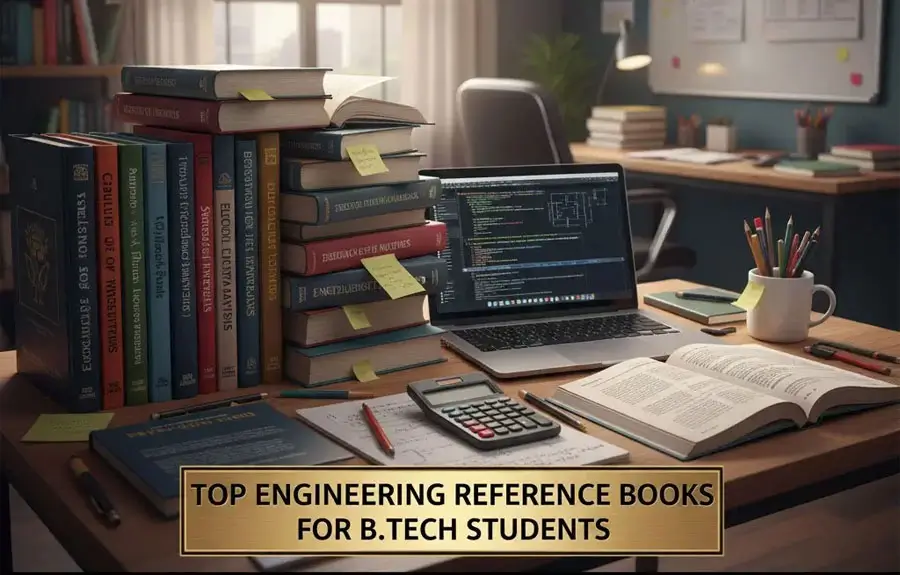
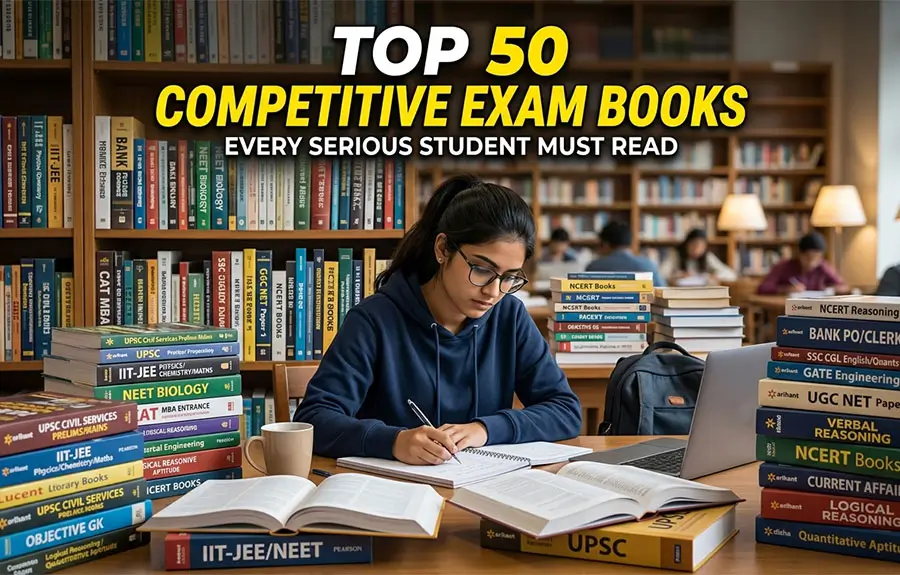
The GATE Exam stands as one of the most prestigious examinations for engineering graduates seeking admission into postgraduate programs, research opportunities, and public sector undertakings. Due to its competitive nature and technical depth, preparation demands conceptual clarity, disciplined practice, and carefully selected study resources. Choosing the Best Books for GATE Preparation is a decisive factor that significantly influences performance.
Unlike many competitive exams that rely heavily on objective memorization, GATE tests analytical understanding and application of core engineering concepts. Questions are often conceptual, numerical, and logic-driven. Aspirants who rely only on short notes or superficial guides often struggle with problem-solving depth. Therefore, selecting high-quality reference books aligned with engineering fundamentals becomes essential.
This detailed guide explains how to choose the right study material branch wise and how to build a preparation strategy that enhances both conceptual strength and exam confidence.
The exam generally consists of three sections: General Aptitude, Engineering Mathematics, and Core Technical Subjects. General Aptitude includes verbal ability and numerical ability. Engineering Mathematics tests topics such as linear algebra, calculus, probability, and differential equations. Core technical subjects vary depending on the branch.
A strong GATE Preparation Strategy begins with understanding weightage distribution. Engineering Mathematics and General Aptitude collectively carry substantial marks and should not be ignored. Many aspirants focus excessively on core subjects and lose easy marks in mathematics and aptitude.
Selecting the Best Books for GATE Preparation must therefore include resources for mathematics and aptitude along with branch-specific technical subjects. A balanced approach ensures stronger overall performance.
Engineering Mathematics forms the backbone of many GATE papers. Topics such as matrices, vector calculus, differential equations, complex variables, and probability require conceptual clarity and repeated practice.
Higher Engineering Mathematics by B.S. Grewal is widely considered a foundational reference. It provides detailed explanations and numerous solved examples. For exam-oriented practice, topic wise GATE question compilations help aspirants understand previous year trends.
An effective GATE Preparation Strategy in mathematics involves solving problems regularly and revising formulas consistently. The Best Books for GATE Preparation in mathematics must offer both theory explanation and application-based problem sets.
General Aptitude may appear simple but often becomes a deciding factor in close competition. It includes English comprehension, verbal reasoning, and quantitative aptitude.
Standard aptitude books such as Quantitative Aptitude by R.S. Aggarwal help strengthen basic calculation skills. Verbal reasoning and comprehension practice from reliable aptitude guides improve language accuracy.
The Best Books for GATE Preparation in aptitude must focus on speed and clarity rather than excessive theory. Regular timed practice enhances confidence in scoring high in this section.
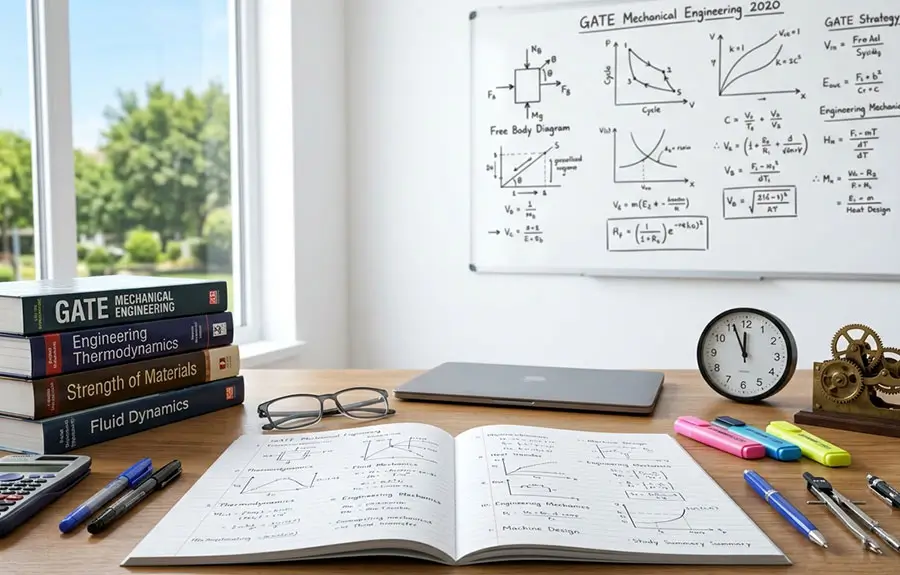
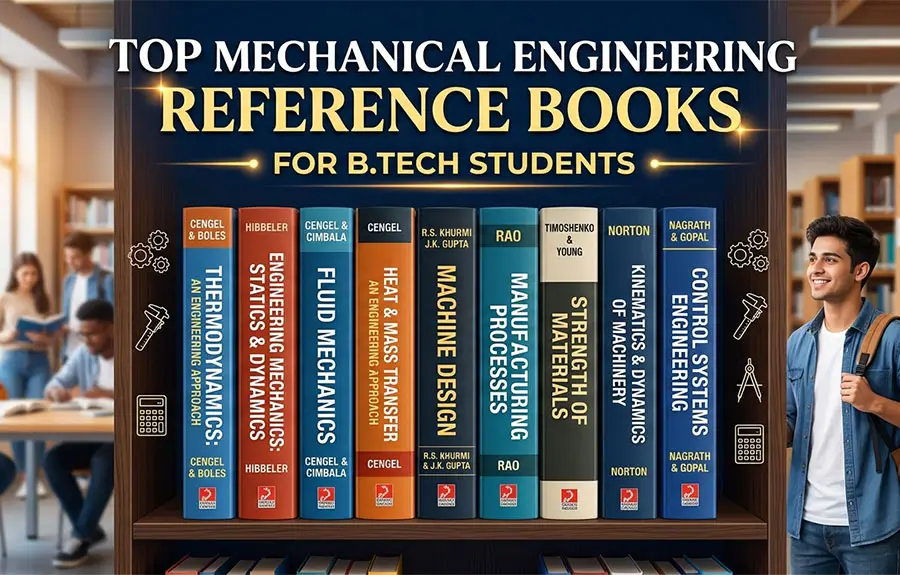
Mechanical Engineering aspirants must cover subjects such as Thermodynamics, Fluid Mechanics, Strength of Materials, Engineering Mechanics, Manufacturing, and Heat Transfer.
For Thermodynamics, Engineering Thermodynamics by P.K. Nag is highly recommended. For Fluid Mechanics, Fluid Mechanics by H.K. Rajput or Fox and McDonald builds strong conceptual understanding. Strength of Materials can be effectively prepared using Strength of Materials by Bansal.
The Best Books for GATE Preparation in Mechanical Engineering must emphasize numerical problem solving and conceptual clarity. Solving previous year question compilations is essential for understanding recurring patterns.
Civil Engineering candidates need to prepare Structural Engineering, Geotechnical Engineering, Environmental Engineering, Transportation Engineering, and Hydrology.
For Structural Engineering, Structural Analysis by C.S. Reddy provides comprehensive coverage. Geotechnical preparation can be strengthened using Soil Mechanics by V.N.S. Murthy. Environmental Engineering concepts are well explained in Environmental Engineering by K.K. Khandelwal.
A successful GATE Preparation Strategy for Civil Engineering involves integrating theoretical study with extensive problem solving. The Best Books for GATE Preparation must align closely with syllabus topics and include practice sets for numerical accuracy.
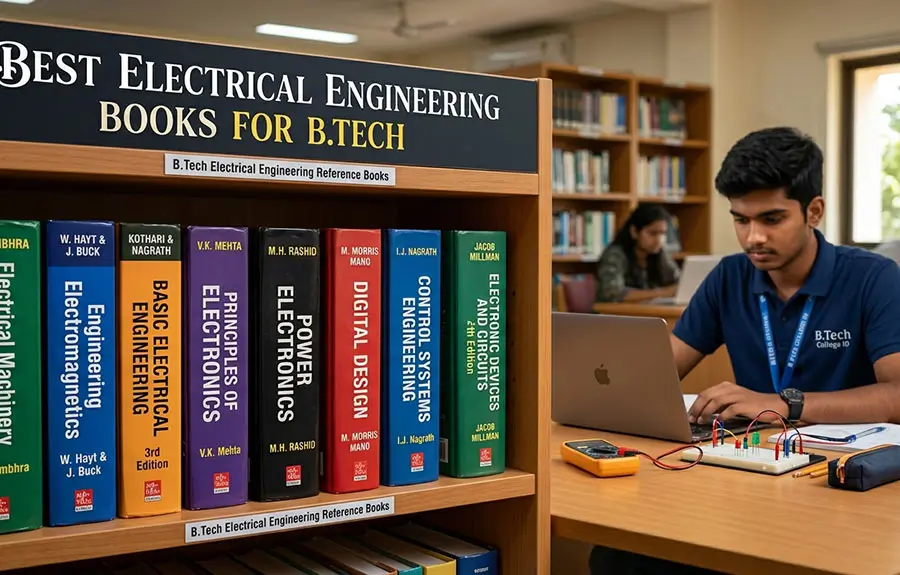
Electrical Engineering includes subjects such as Network Theory, Power Systems, Control Systems, Electrical Machines, and Signals and Systems.
For Network Theory, Network Analysis by M.E. Van Valkenburg provides deep conceptual clarity. Electrical Machines can be prepared using Electrical Machines by P.S. Bimbhra. Control Systems preparation is strengthened with Control Systems by I.J. Nagrath and M. Gopal.
The Best Books for GATE Preparation in Electrical Engineering must emphasize analytical problem solving and numerical practice. Regular revision of formulas enhances performance.
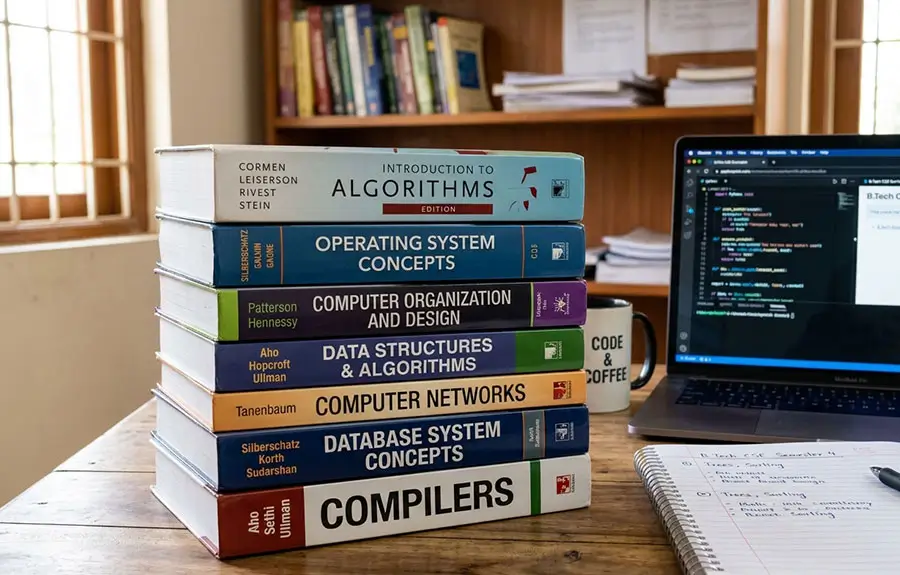
Computer Science aspirants must cover Data Structures, Algorithms, Operating Systems, Computer Networks, Theory of Computation, and Database Management Systems.
Data Structures and Algorithms by Cormen provides strong theoretical foundation. Operating Systems can be prepared using Operating System Concepts by Galvin. For Computer Networks, Computer Networking by Kurose and Ross offers conceptual clarity.
A strong GATE Preparation Strategy for Computer Science involves understanding algorithm complexity and practicing previous year questions thoroughly. The Best Books for GATE Preparation in this branch must support both theory and application.
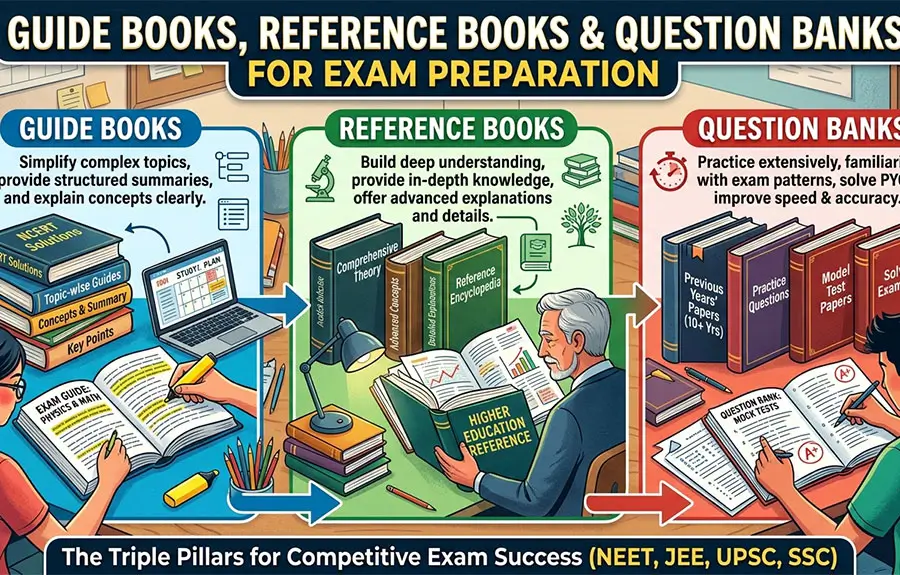
Previous year question compilations are indispensable for GATE preparation. They reveal topic importance and help aspirants understand question framing style.
Mock tests simulate real exam conditions and improve time management. Regular mock analysis identifies weak areas and strengthens preparation.
The Best Books for GATE Preparation often include chapter wise solved papers that build exam confidence.
GATE requires disciplined long term planning. Aspirants should allocate time to each subject systematically and revise regularly. Creating short notes for formulas and key concepts helps in final revision.
Instead of collecting multiple books, focus on limited trusted resources and revise them thoroughly. Concept clarity combined with practice ensures high performance.
Consistency, strategic book selection, and regular evaluation determine success in this competitive examination.
Higher Engineering Mathematics by B.S. Grewal is widely trusted.
Yes, they help understand topic weightage and question trends.
Practice quantitative aptitude and comprehension regularly.
One strong reference book combined with previous year papers is usually sufficient.
Mock tests improve time management and accuracy significantly.
Mechanical, Civil, and Electrical branches require extensive numerical solving.
Yes, disciplined self-study with right books can lead to success.
It is better to stick to limited trusted resources and revise them thoroughly.
Preparation duration depends on baseline knowledge and consistency.
Concept clarity, consistent practice, and structured revision are essential.

We offer fast delivery.

We offer E-Gift Cards.

Dedicated 24/7 support.

100% secure payment.

 My Order
  0
0