ICSE board examinations are known for their depth, detailed evaluation, and emphasis on conceptual clarity and written expression. Students preparing for ICSE boards often ask how many sample papers they should solve to feel confident and exam-ready. While the question seems simple, the answer depends on how effectively those sample papers are used. Understanding how many sample papers are enough to crack ICSE boards requires a balanced view of quality, consistency, and evaluation.
Sample papers are not just practice tools; they are performance indicators. They reflect a student’s readiness, highlight weak areas, and train the mind to handle board-level questions. However, solving too many papers without analysis can be counterproductive, while solving too few may leave gaps in preparation.
ICSE board exams focus heavily on descriptive answers, structured explanations, and correct usage of terminology. Subjects such as English, History, Geography, Science, and Commercial Studies require students to express ideas clearly and logically.
The evaluation process values content accuracy, answer structure, examples, diagrams, and presentation. Therefore, preparation must go beyond textbook reading. ICSE sample papers help students align their answers with examiner expectations.
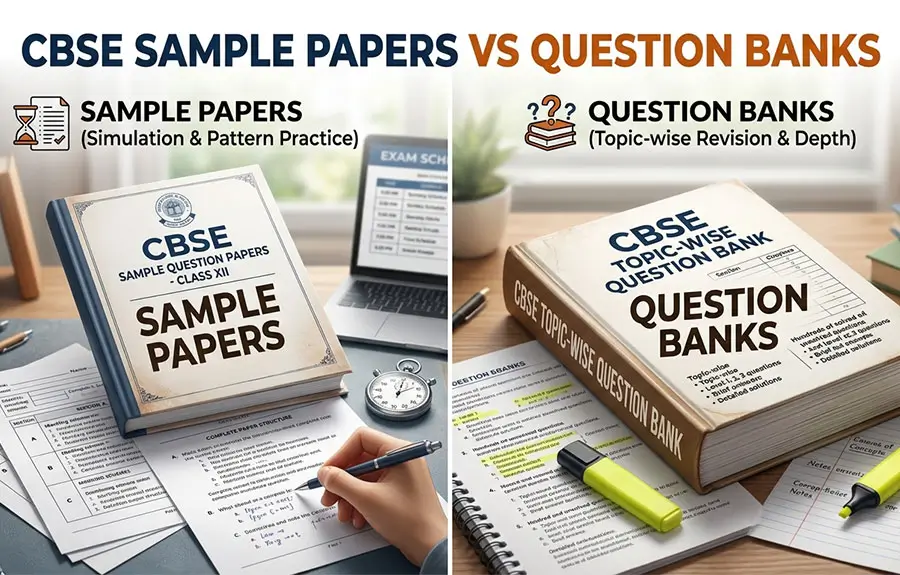
Many students assume that solving a large number of sample papers automatically guarantees success. In reality, effectiveness matters more than quantity. Solving fewer papers with proper evaluation often yields better results than rushing through many papers without feedback.
Understanding ICSE board sample paper importance helps students focus on improvement rather than numbers. Each sample paper should act as a learning opportunity rather than a checklist item.
Sample papers simulate actual board exam conditions. They familiarize students with question patterns, mark distribution, and time constraints.
By solving ICSE sample papers, students experience the pressure of writing long answers within limited time. This practice builds stamina and improves writing efficiency.
Exam readiness improves when students know what to expect and how to respond effectively.
There is no fixed number that suits every student. The ideal number depends on preparation level, subject strength, and learning pace.
Students with strong fundamentals may require fewer papers, while those who struggle with time management or answer structure may need more practice. The goal is not to solve the maximum number of papers but to reach a point where performance becomes consistent.
Understanding ICSE board exam preparation through sample papers helps students identify when they are truly ready.
A single sample paper, when properly analyzed, can provide insights equivalent to several rushed attempts. Students should focus on writing complete answers, checking them against marking schemes, and correcting mistakes.
ICSE answer writing improvement happens through reflection and correction, not just repetition. Quality practice leads to steady progress.
Solving sample papers without evaluation defeats the purpose of practice. Evaluation helps identify gaps in content, structure, and presentation.
Teacher feedback or self-evaluation using marking schemes is essential. Students should understand why marks were lost and how answers can be improved.
ICSE sample paper evaluation is where real learning happens.
Time management is a critical challenge in ICSE exams. Writing descriptive answers within time limits requires practice.
Solving sample papers under timed conditions helps students allocate time effectively across sections. Over time, students learn to pace themselves without rushing or leaving questions unanswered.
ICSE exam time management improves significantly through consistent sample paper practice.
ICSE examiners value structured answers with clear introductions, explanations, and conclusions. Sample papers train students to organize their thoughts logically.
Regular practice improves handwriting speed, spacing, underlining of key points, and diagram presentation. These aspects directly influence scoring.
Different subjects benefit differently from sample paper practice. In Science, accuracy and diagrams improve. In Humanities, narrative flow and explanation quality strengthen. In English, language clarity and expression develop.
Practicing ICSE subject-wise sample papers ensures balanced preparation across all subjects.
Sample papers act as diagnostic tools. They reveal chapters where students lose marks consistently.
Once weak areas are identified, focused revision can be done using textbooks and notes. This targeted approach improves efficiency and confidence.
Solving too many sample papers without breaks can lead to fatigue and reduced concentration. Burnout negatively affects performance.
Students should maintain a balanced schedule that includes revision, practice, and rest. ICSE board preparation strategy should support mental well-being.
Sample paper practice should go hand in hand with revision. After solving a paper, students should revise related chapters and concepts.
This integration ensures that mistakes are corrected and not repeated. ICSE revision through sample papers enhances retention and understanding.
Previous year question papers provide insight into board trends. Combining them with sample papers offers comprehensive preparation.
Sample papers introduce new patterns, while previous year papers show recurring themes. Together, they strengthen exam readiness.
Exam temperament refers to the ability to stay calm, focused, and confident during the exam. Sample papers help build this mental strength.
Repeated exposure to exam-like conditions reduces anxiety and improves decision-making during the actual exam.
Every student learns differently. Some improve rapidly with fewer papers, while others need repeated practice.
Students should customize their ICSE sample paper strategy based on self-assessment rather than peer comparison.
Teachers guide students in selecting the right sample papers and evaluating answers. Parents provide emotional support and encourage consistent effort.
A supportive environment enhances the effectiveness of sample paper practice.
Students can consider themselves ready when scores stabilize across multiple sample papers and mistakes reduce significantly.
Consistency indicates mastery of content, time management, and answer writing skills.
The skills developed through sample paper practice extend beyond ICSE boards. Structured writing, time management, and analytical thinking benefit future academic pursuits.
Sample papers prepare students not just for exams, but for disciplined learning habits.
There is no fixed number; quality practice matters more than quantity.
They must be combined with textbook revision and evaluation.
Yes, timed practice improves exam readiness.
Excessive practice without analysis can cause burnout.
Yes, they enhance structure, clarity, and presentation.
Teacher feedback significantly improves answer quality.
Yes, they complement sample papers effectively.
Yes, familiarity with exam format builds confidence.
Both types are useful for balanced preparation.
When performance becomes consistent and errors reduce.

We offer fast delivery.

We offer E-Gift Cards.

Dedicated 24/7 support.

100% secure payment.

 My Order
  0
0