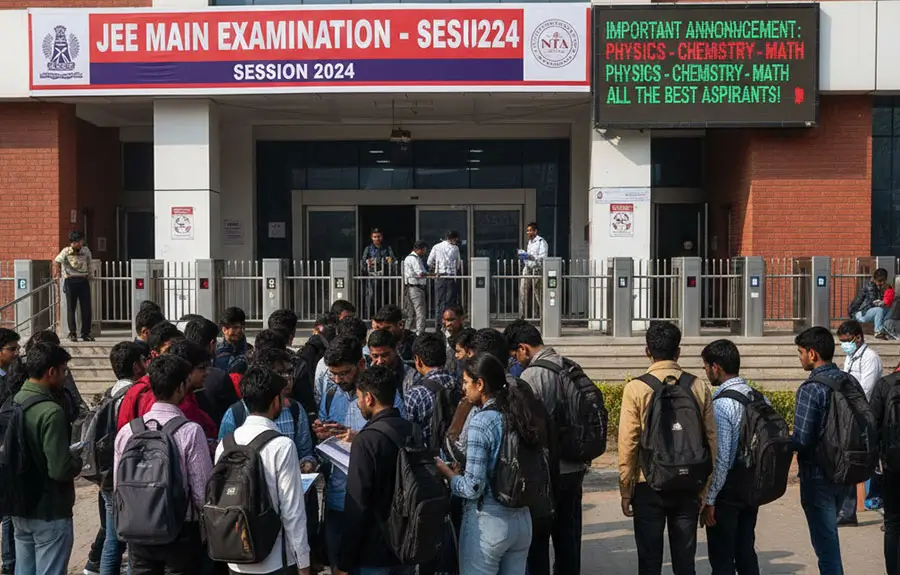
The final phase before JEE Main is often the most stressful period for aspirants. Months or even years of preparation come down to a few crucial days when clarity, confidence, and calmness matter more than learning new chapters. At this stage, the focus should not be on covering untouched topics but on refining what has already been studied. Understanding the right last-minute revision tips for JEE Main can make a significant difference in performance.
JEE Main tests not only conceptual understanding but also speed, accuracy, and mental stability. Many students know the syllabus well but struggle due to panic, poor recall, or inefficient revision. Smart revision during the final days helps convert preparation into marks.
Last-minute revision is meant to strengthen memory and boost confidence. It is not the time to experiment with new books, advanced problem sets, or unfamiliar strategies. The goal of JEE Main revision is to consolidate formulas, reinforce concepts, and improve question selection skills.
This phase allows students to identify weak areas, revise frequently asked topics, and sharpen problem-solving speed. A calm and structured approach to revision often separates top performers from average scorers.
During the final revision phase, depth matters more than breadth. Revising fewer topics thoroughly is far more effective than skimming multiple chapters superficially. Concept clarity for JEE Main ensures that students can tackle both straightforward and tricky questions with confidence.
Physics concepts like mechanics and electricity, chemistry fundamentals like bonding and reactions, and mathematics topics such as algebra and calculus require focused revision. Strengthening basics improves accuracy and reduces negative marking.
Formulas play a critical role in JEE Main. A significant portion of questions can be solved quickly if formulas are recalled accurately. JEE Main formula revision should be a daily activity during the final phase.
Students should rely on self-prepared formula sheets rather than bulky books. Revising formulas multiple times improves recall speed and helps in quick application during the exam.
Understanding the derivation and application of formulas also prevents confusion between similar expressions.
Each subject in JEE Main demands a different revision strategy. Physics requires conceptual visualization and numerical practice. Chemistry involves theory retention and reaction understanding. Mathematics focuses on problem-solving techniques and speed.
A balanced JEE Main subject-wise revision plan ensures that no subject is neglected. Students should allocate time according to their strengths and weaknesses rather than following a rigid timetable.
Certain chapters consistently carry higher weightage in JEE Main. Revising these areas boosts scoring potential. Topics such as thermodynamics, electrostatics, organic chemistry basics, and coordinate geometry frequently appear in the exam.
Focusing on high-weightage topics for JEE Main during last-minute revision improves efficiency and confidence. Students should ensure that they can solve standard questions from these chapters without hesitation.
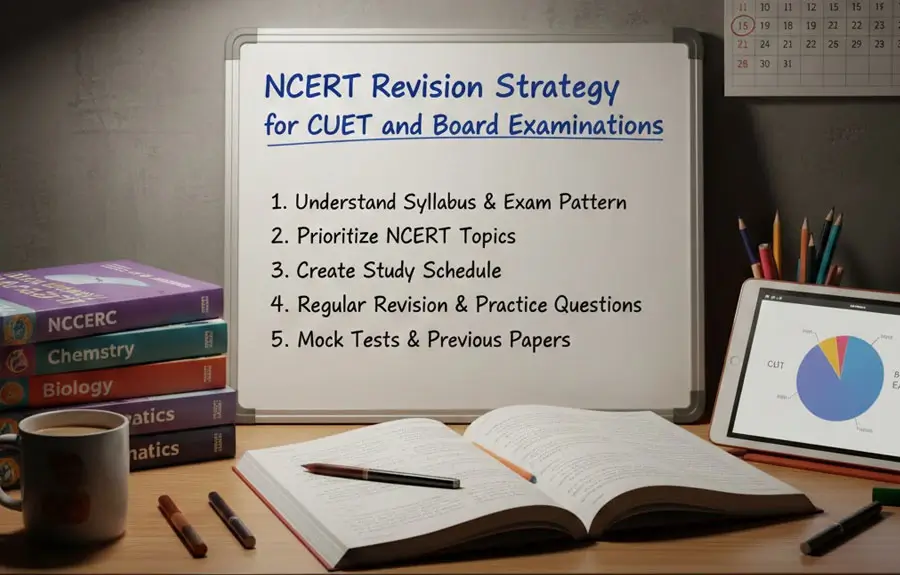
NCERT textbooks are extremely important for chemistry, especially inorganic and organic sections. Many JEE Main questions are directly or indirectly based on NCERT content.
NCERT revision for JEE Main helps students avoid factual errors and strengthens conceptual understanding. Revising highlighted lines, tables, and examples from NCERT books is highly beneficial.
Mock tests serve as both assessment and revision tools. Attempting full-length tests helps students simulate exam conditions and manage time effectively.
The real value lies in analyzing mock tests. JEE Main mock test analysis helps identify recurring mistakes, weak concepts, and time-consuming question types. Students should focus more on analysis than on the number of tests attempted.
Silly mistakes often cost valuable marks. During the final phase, students should consciously work on improving accuracy.
Careful reading of questions, checking units, and avoiding unnecessary assumptions help reduce errors. Accuracy improvement for JEE Main comes from mindful practice rather than speed alone.
Time management is critical in JEE Main due to the number of questions and limited duration. Students should revise strategies for question selection and time allocation.
Attempting easier questions first builds confidence and saves time for tougher ones later. Time management for JEE Main improves with repeated practice under timed conditions.
One of the biggest mistakes students make is trying to learn new topics close to the exam. This often leads to confusion and stress.
Last-minute revision should strictly focus on familiar content. JEE Main last-day preparation is about reinforcement, not expansion.
Mental calmness plays a huge role in exam performance. Anxiety can affect recall and decision-making even if preparation is strong.
Light physical activity, adequate sleep, and short breaks improve mental clarity. Stress management for JEE Main is as important as academic revision during the final phase.
Irregular sleep patterns negatively impact concentration and memory. Students should maintain a consistent routine during the last days before the exam.
Proper rest enhances alertness and problem-solving ability. A well-rested mind performs better under pressure.
Previous year questions provide insight into exam trends and difficulty level. Revising solved questions helps students recognize familiar patterns.
JEE Main previous year questions revision improves confidence and reduces surprises during the exam.
Confidence is essential, but overconfidence can be risky. Students should attempt questions they are comfortable with and avoid guesswork.
A balanced mindset helps in making rational decisions during the exam.
The day before the exam should be kept light. Revising formulas, key concepts, and short notes is sufficient.
Avoid heavy study sessions or mock tests on the last day. Day-before JEE Main revision should focus on mental readiness.
On exam day, calmness and focus matter more than last-minute reading. Trust in preparation and follow the planned strategy.
Reading instructions carefully and managing time wisely ensures smooth execution.
It strengthens recall, accuracy, and confidence before the exam.
No, focus should remain on already studied content.
Through concise self-made formula sheets and repeated revision.
Yes, especially for chemistry-based questions.
Quality analysis matters more than quantity.
Careful reading, unit checks, and mindful practice.
Maintain routine, sleep well, and take short breaks.
Yes, it improves familiarity with exam patterns.
Light revision and mental relaxation.
Yes, a calm and confident mindset improves execution.

We offer fast delivery.

We offer E-Gift Cards.

Dedicated 24/7 support.

100% secure payment.

 My Order
  0
0