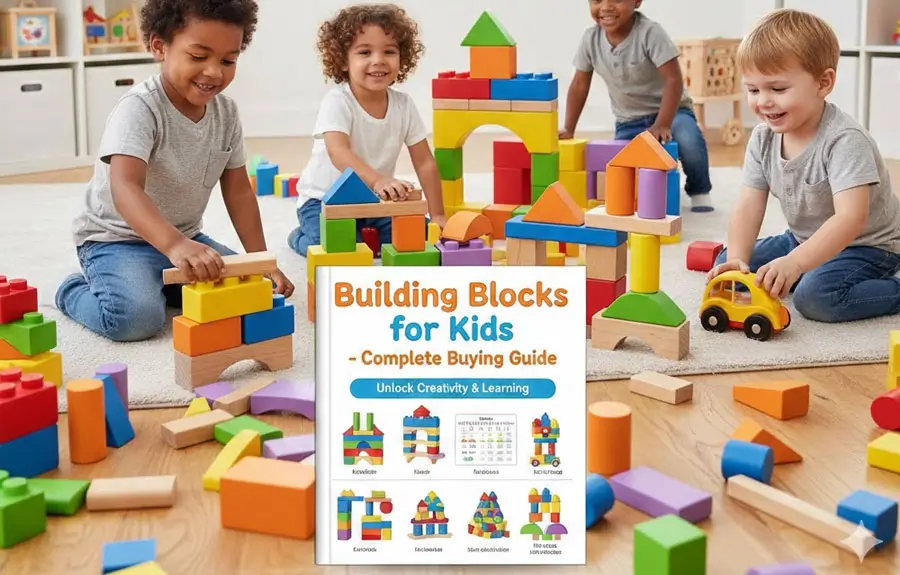
Building blocks are one of the most influential learning tools in early childhood. They are simple, timeless and incredibly effective in shaping a child’s creativity, problem-solving ability and motor development. Whether wooden, foam, plastic or magnetic, building blocks for kids encourage exploration, imagination and hands-on learning. They support multiple areas of childhood development, helping children understand concepts like balance, structure, patterns, height, weight and geometry — all through play.
Blocks feel natural to children because they align with their instinct to build, stack, knock down and rebuild. These actions help children learn through experimentation. When blocks fall, children learn stability; when blocks stand tall, they learn balance; when blocks connect, they understand structure. This trial-and-error approach strengthens early cognitive skills and develops resilience.
In early childhood, toys that encourage open-ended play bring the most benefit, and building blocks are the perfect example. They do not dictate rules, sounds or instructions. Instead, they invite the child to imagine freely. Blocks become towers, bridges, houses, tunnels, rockets, trucks or animals — the possibilities depend only on the child’s imagination. This makes block play one of the richest forms of developmental learning.
Block play activates multiple developmental areas at once. Children learn how to use both hands together, how objects behave in space and how to solve problems through repeated attempts. Blocks create a calm learning environment where children stay engaged without digital stimulation.
Building blocks help children:
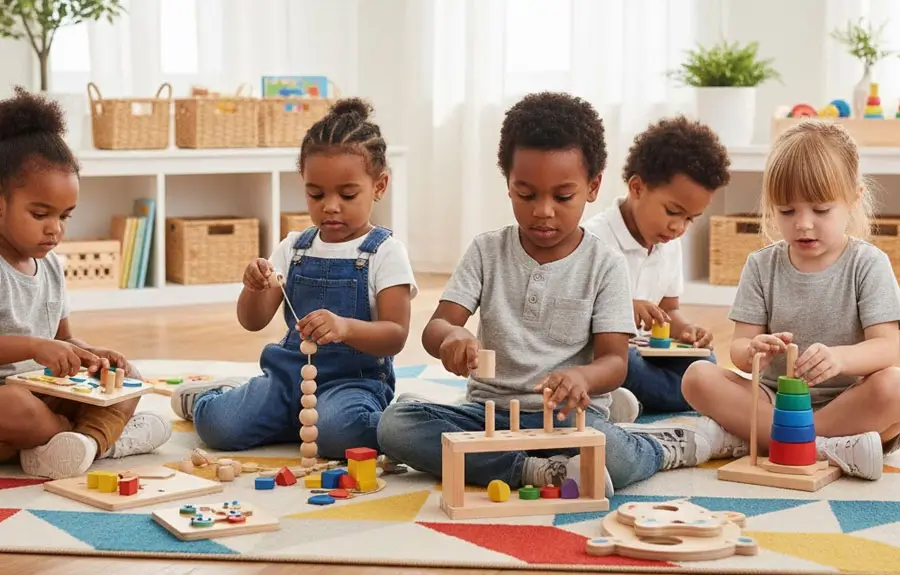
The open-ended nature of block play means that children of different ages use the same toy differently. Babies explore textures and shapes, toddlers stack and sort, and older children design complex structures.
Blocks nurture creativity because they never limit what a child can create. There are no predefined outcomes. Children become the designers, builders and thinkers. They learn to visualise something in their mind and attempt to build it with their hands.
Through block play, children create:
This free-flowing creativity strengthens visualization skills and enhances storytelling. When children talk about what they build, language skills grow naturally. The combination of imagination and construction strengthens both artistic and logical thinking.
Block play requires grip strength, control and precision. Whether children are placing a block gently on top of another or aligning pieces to create a stable structure, they develop strong hand muscles.
Blocks improve:
These fine motor abilities support handwriting readiness, drawing skills, cutting, threading and daily self-care tasks. Wooden blocks offer more weight and resistance, making them excellent for strengthening small muscles.
Hand–eye coordination improves as children visually judge where to place blocks and match that vision with hand movement. When a structure becomes unstable, children notice the tilt, adjust their hands and correct the angle. This practice refines coordination naturally.
Block play teaches children to:
These skills support sports, writing, drawing and practical life activities.
One of the greatest benefits of building blocks is how they challenge a child’s thinking. Children learn to assess what went wrong, make adjustments and try again. This builds persistence and analytical skills.
During block play, children learn:
When a tower falls, the child experiments with a wider base. When a bridge collapses, they learn to support it differently. These hands-on challenges develop strong reasoning abilities.
Block play introduces early geometry and spatial learning effortlessly. Children explore height, width, depth, angles, shapes and patterns while building.
Blocks teach:
These early math concepts prepare children for future learning in numeracy, design and STEM-related subjects.
When children describe what they create, vocabulary expands. They use words related to size, shape, movement and direction. Parents can enhance language learning by discussing the blocks during play.
Block play naturally introduces vocabulary such as:
This builds communication skills without feeling like formal learning.
Blocks encourage teamwork, patience and cooperation when children play together. They learn to share, take turns, negotiate ideas and build collaborative structures.
Emotional benefits include:
When children complete a structure, they feel successful. If it collapses, they learn persistence instead of frustration. Block play teaches emotional strength in a gentle, natural way.
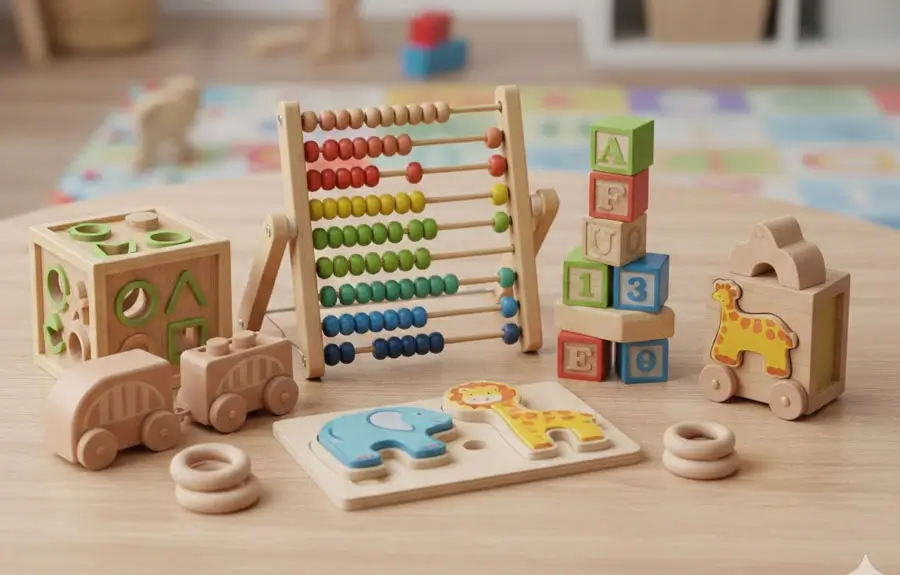
Wooden Building Blocks
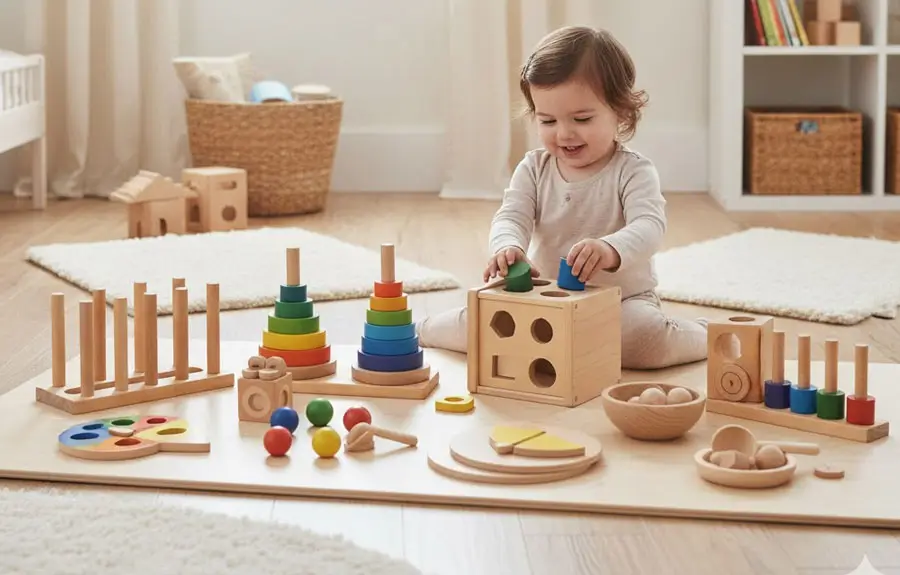
Durable, eco-friendly and perfect for sensory-rich play. Great for fine motor development, balance practice and creative building.
Foam Blocks
Soft, lightweight and ideal for younger babies. Good for safe stacking, throwing and knocking over.
Magnetic Blocks
Help children learn connection, polarity and structure. Excellent for creating stable, complex designs.
Plastic Interlocking Blocks
Support logical building, engineering concepts and problem-solving through click-and-fit connections.
Transparent Light Blocks
Encourage sensory and imaginative play with colour mixing, shadow play and light exploration.
Large Cardboard Blocks
Suitable for toddlers who enjoy large-scale building. Promote gross motor engagement and creativity.
Unit Blocks (Montessori Style)
Offer mathematical precision in shape and size. Enhance spatial intelligence and structured building.
Themed Blocks
Include animals, letters or vehicles to support vocabulary, imaginative play and early literacy.
Soft Fabric Blocks
Great for babies transitioning to standing and crawling. Support sensory development and safe exploration.
Natural Tree Blocks
Provide texture-rich play and encourage nature-based learning experiences.
Choosing the best building blocks depends on age, safety, material quality and developmental goals. Parents should look for blocks that encourage independent play and creativity.
Important factors include:
Wooden and magnetic blocks are excellent choices for long-term use, while foam and soft blocks work best for younger babies.
Parents should avoid very small pieces for toddlers to prevent choking risks.
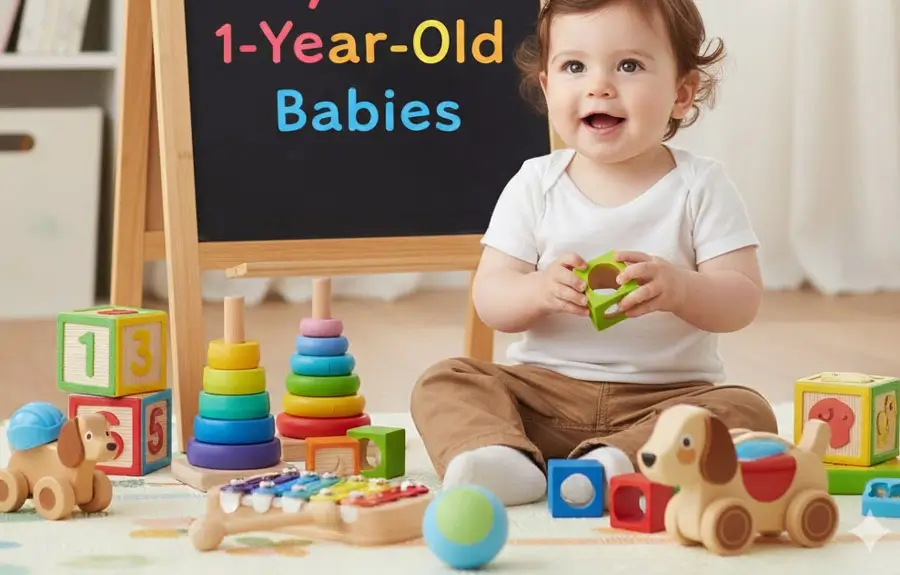
For babies around one year:
For toddlers two to three years:
For children four years and above:
Choosing blocks that match developmental stages ensures the child stays engaged without frustration.
Parents can enhance the educational value of block play by creating an environment where children feel free to explore. Simple guidance helps children discover new ways to build.
Helpful methods include:
Children learn best when play remains child-led and joyful.
Yes, they support creativity, motor skills, spatial learning, reasoning and emotional development.
Babies can start around one year with large soft blocks, gradually moving to wooden and magnetic blocks.
Wooden blocks offer rich sensory experiences, durability and better weight for motor development.
They strengthen spatial reasoning, problem-solving and cognitive flexibility.
Yes, blocks provide engaging, hands-on play that keeps kids occupied without digital stimulation.
High-quality sets with secure magnets are safe and excellent for structured building.
Yes, blocks introduce patterns, symmetry, counting, size comparison and early geometry.
Children naturally learn new words when describing their creations.
They teach patience, resilience and confidence as children build and rebuild.
Only a few high-quality sets are enough; open-ended block play creates endless possibilities.

We offer fast delivery.

We offer E-Gift Cards.

Dedicated 24/7 support.

100% secure payment.

 My Order
  0
0