Phonics is one of the most important building blocks for early reading. When children learn phonics correctly, they understand how letters connect with sounds, how those sounds blend together and how words form naturally. Kindergarten is the stage where children shift from recognising letters to understanding how letters work, and this transition requires strong phonics exposure. Phonics books are designed to make this journey simple, structured and enjoyable. These books use sound patterns, repetitive cues, visual prompts and blending techniques to help children decode words easily.
At the kindergarten age, children become more curious about reading. They begin asking how words are formed and attempt to read simple text around them. Phonics books give them the tools needed to decode unfamiliar words instead of memorising them. When children learn to break words into sound units, their reading fluency improves significantly. Phonics helps children understand that every letter or letter group has a sound, and those sounds join together to create meaning.
Phonics books introduce sounds gradually, starting with simple consonants and short vowels, then progressing to blends, digraphs and word families. This structured learning path supports clarity and confidence. By using phonics books consistently, kindergarten children develop the foundation they need for lifelong reading ability. Phonics not only helps them read but also improves spelling, pronunciation and vocabulary.
Kindergarten is a critical stage where children move beyond recognizing letters to understanding how letters connect. This is the foundation of reading and writing. Without phonics, children rely heavily on memorizing whole words, which becomes difficult as vocabulary grows. Phonics gives children the independence to decode new words confidently.
Phonics strengthens sound recognition, listening skills, word blending, and reading fluency. When children understand that “c-a-t” blends to form “cat,” they experience achievement that motivates further reading. The ability to identify, separate and blend sounds sharpens auditory skills, which are essential for storytelling, comprehension and classroom learning.
Phonics also builds early spelling awareness. Children begin understanding that spelling reflects sound patterns. This awareness improves writing accuracy and encourages children to attempt new words without fear. Phonics books make this process simple by presenting sounds in a controlled, step-by-step sequence.
Childhood research consistently shows that strong phonics foundations lead to better academic performance in reading-heavy subjects. Phonics books make learning interactive, visual and engaging, ensuring that children develop skills that support future success.
Phonics books are specifically designed to introduce letter sounds in an age-appropriate way. Instead of overwhelming children with long words or complicated rules, phonics books break down learning into small, manageable steps. They begin with single sounds like b, m, t, and s, which are easy for children to pronounce and recognise.
These books use repetition to reinforce learning. A child may see pictures and words that begin with the same sound, such as bat, ball, bag and bell, allowing them to associate the letter with its sound clearly. Repetition builds familiarity and confidence, helping children understand that sounds repeat across different words.
Phonics books also use visual cues to help children connect letters with objects. If a book teaches the letter “p,” it may show pictures of pan, pen and pig. Visual repetition strengthens memory and makes the learning experience more enjoyable. Children begin to recognise patterns and predict sounds in other words.
Some phonics books include actions or hand motions to strengthen sound recall. When children pair movement with sound, the multisensory experience improves retention. This approach makes sound recognition an active, engaging experience.
Letter–sound correspondence is the core of phonics learning. Children need to understand that each letter represents a sound and that these sounds combine to form words. Phonics books introduce this concept gently by starting with letters that are easiest to pronounce.
A well-designed phonics book presents one letter per section, pairing it with images and simple words that reinforce the sound. The clarity of this format helps children absorb the sound without confusion. Once children develop accuracy with individual letter sounds, books gradually introduce short-vowel sounds like a, e, i, o, u, allowing children to form complete short words.
These books avoid overcrowded pages because minimal text helps children focus on sounds rather than distractions. The repetitive structure allows children to predict which sound will appear next, making learning natural and intuitive.
Letter–sound correspondence is also supported through tracing activities in some phonics books. When children trace letters while saying the sound aloud, it engages auditory, visual and motor learning simultaneously. This multi-sensory approach is highly effective for kindergarten learners.
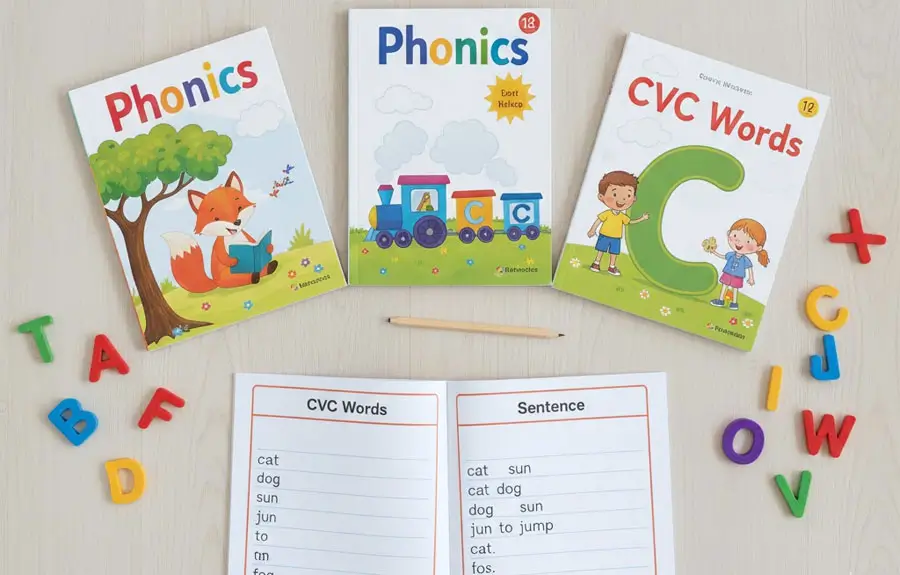
Phonics books do more than teach individual sounds; they teach how sounds blend to form words. Blending is one of the most critical skills for early reading. Children must learn how the sounds of letters combine smoothly. For example, “c,” “a,” and “t” must be blended to form “cat.”
Phonics books introduce short word families — groups of words that share common endings such as -at, -an, -it or -og. When children learn the -at family, they begin reading words like cat, bat, hat, sat and rat. This clustered learning boosts reading confidence because children learn multiple words quickly.
Blending exercises help children transition from isolated sound recognition to whole-word reading. Phonics books often use arrows, colour coding or spaced letters to guide children from one sound to the next. This visual aid supports smooth blending and reduces hesitation.
Blending also improves pronunciation. When children practise blending sounds repeatedly, they develop fluency and clarity in speech. Word families make reading feel achievable and enjoyable.
Reading fluency refers to the ability to read words correctly, smoothly and confidently. Phonics books are the strongest tool for building fluency at the kindergarten stage. When children understand how sounds blend, they begin reading new words independently rather than relying on memorization.
Phonics books encourage consistent decoding practice. Each page introduces a structured set of sounds that children can decode using earlier lessons. This continuity strengthens fluency. Over time, children begin recognising patterns automatically, allowing them to read faster and with greater confidence.
Phonics-based reading materials often use simple sentences such as:
“The cat is on the mat.”
“The dog can run.”
These sentences reinforce blending, structure and meaning. Children enjoy reading these aloud because the words feel manageable. Fluency grows as children practise these phonetic patterns repeatedly.
Fluent readers develop stronger comprehension because they spend less mental energy decoding words. This is why phonics books are essential for developing long-term reading skills.
Spelling becomes easier when children understand sound–letter relationships. Phonics books lay the foundation for correct spelling by showing children how sounds map onto letters. When children learn that the sound /m/ corresponds to the letter m, and /a/ corresponds to a, they begin writing simple words like man or map with ease.
Phonics books encourage children to sound out words while writing. This strengthens auditory awareness and eliminates guesswork. Writing becomes a natural extension of reading.
As children progress, phonics books introduce blends such as bl, tr, gr, and digraphs like sh, ch, th. Understanding these patterns helps children spell more complex words. The visual repetition in phonics books reinforces correct patterns, supporting accuracy in early writing.
By introducing predictable patterns, phonics books reduce frustration. Children feel empowered when they can spell words independently, building self-esteem and motivation.
Phonics learning is rooted in sound awareness. Children must listen carefully to differentiate between similar sounds such as p and b, or f and v. Phonics books include exercises that encourage focused listening, such as identifying beginning sounds or matching pictures with corresponding sounds.
These listening activities sharpen auditory discrimination — a skill essential for reading comprehension, following instructions and classroom success. Listening practice helps children understand sound length, pitch and clarity.
Phonics books often include rhythmic patterns or repetitive sounds that help children tune their ears to language. Listening becomes a playful exercise rather than a task, and this strengthens the child's overall learning capacity.
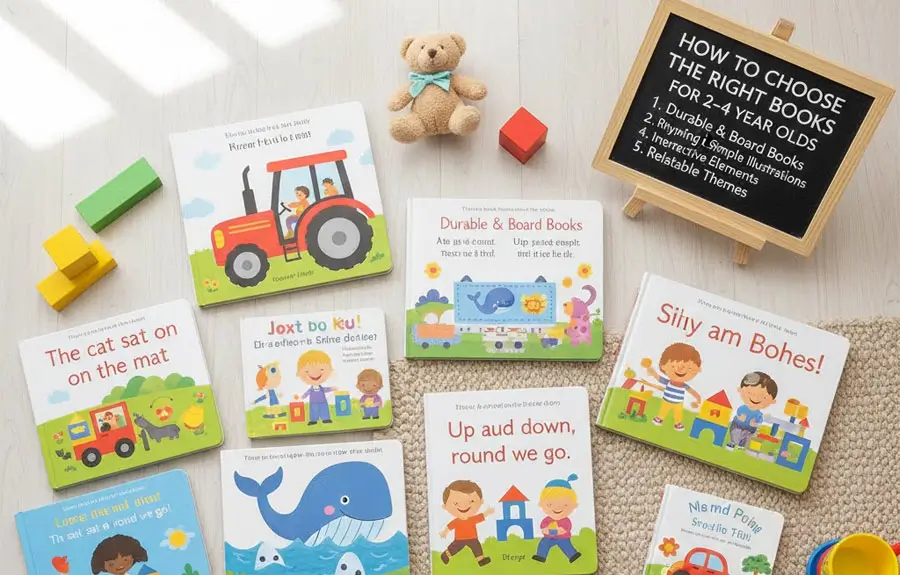
Parents should choose phonics books that follow a structured progression. Books must introduce sounds gradually, starting with simple consonants and short vowels before moving to blends and word families. Clear visuals, uncluttered pages and bold letters make sound recognition easier.
Books should include interactive elements such as tracing, blending arrows and simple sentences. These help children practise reading and writing simultaneously. Phonics books should also include plenty of repetition because consistency reinforces learning.
Parents should avoid books with overly complex stories or long words at the early stage. Phonics learning must begin with simplicity and grow progressively.
Yes, these books are designed to strengthen early cognitive skills.
Guidance helps, but toddlers should also explore independently.
Yes, they build skills needed for reading, writing and early math.
Repetitive patterns and matching tasks significantly improve memory.
Hands-on tasks support deeper learning and motor skill development.
Short, consistent sessions are most effective.
Structured activities help toddlers focus for longer periods.
Many books include tracing and interactive tasks to support fine motor skills.
Yes, toddlers remain engaged through hands-on activities.
Toddlers can start exploring from age two, depending on interest.

We offer fast delivery.

We offer E-Gift Cards.

Dedicated 24/7 support.

100% secure payment.

 My Order
  0
0