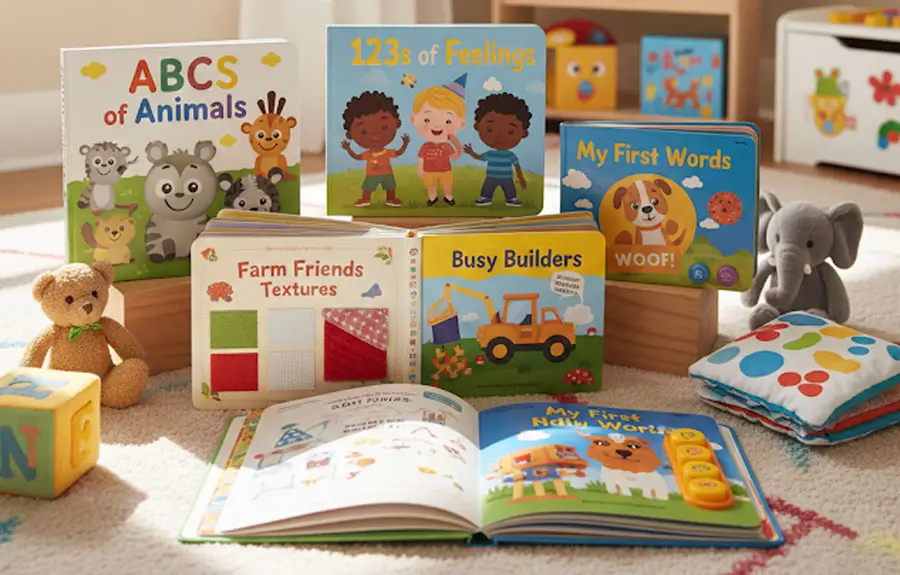
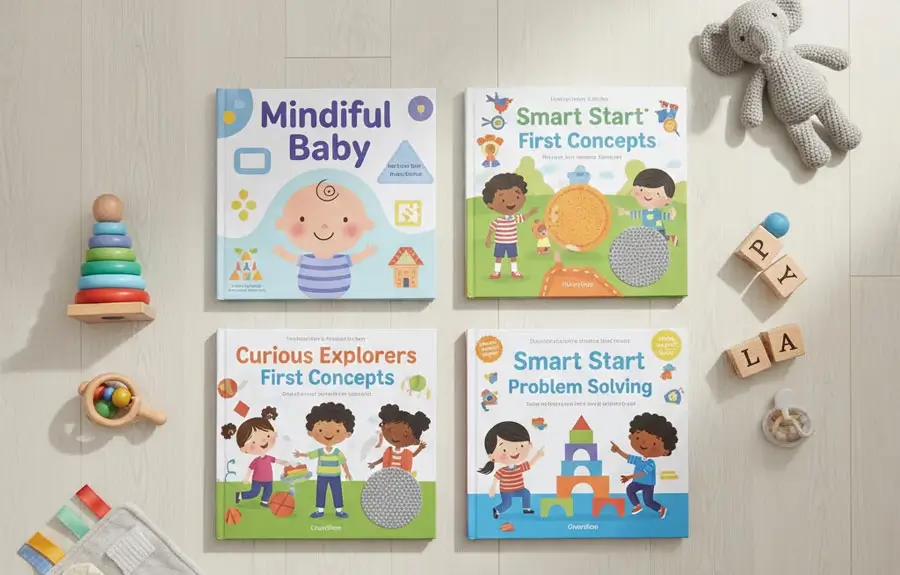
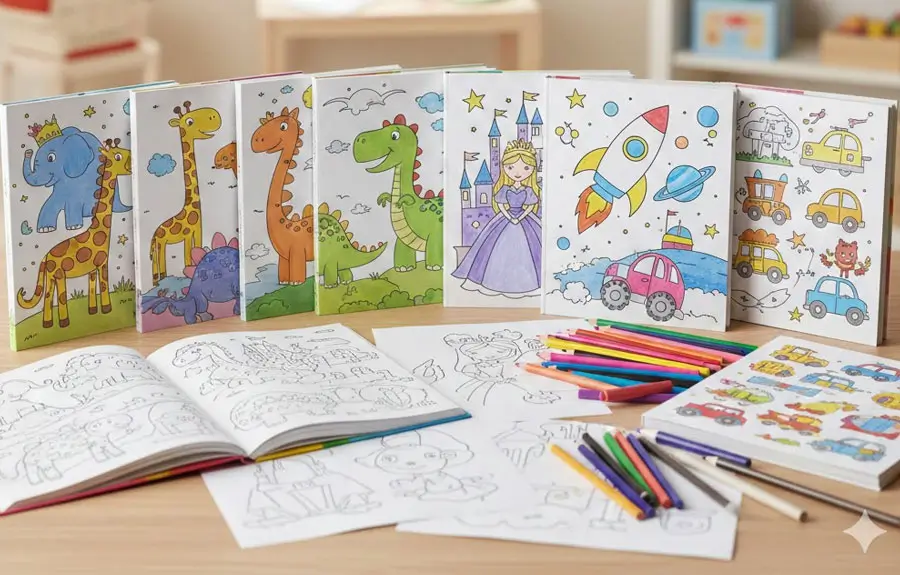
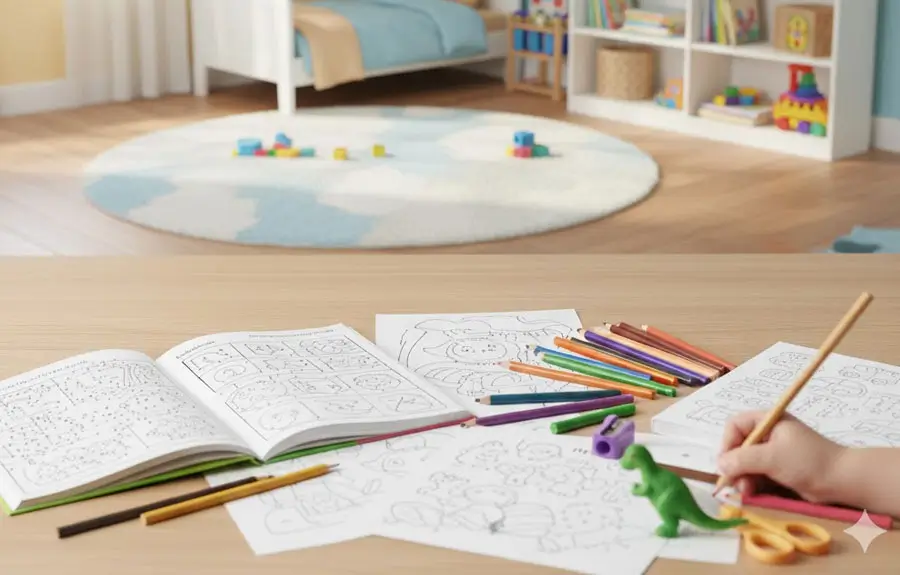
Puzzle books remain one of the most effective learning tools for children because they transform thinking into an enjoyable, hands-on activity. Kids love challenges, surprises and the thrill of solving something new. Puzzle books give them exactly that — a mix of fun and structured learning. What seems like a simple game is actually a complete mental workout. Puzzle books for kids support cognitive development, improve reasoning, strengthen concentration and enhance problem-solving skills in a playful, engaging way.
Every puzzle encourages children to think, analyse, compare and decide. Whether it’s matching pictures, solving mazes, spotting differences, connecting pieces mentally or unlocking patterns, puzzle books activate multiple brain areas at once. These early experiences shape how children approach challenges in future academic and life situations. Puzzle books also build independence because kids learn to try different options, correct mistakes and find solutions by themselves.
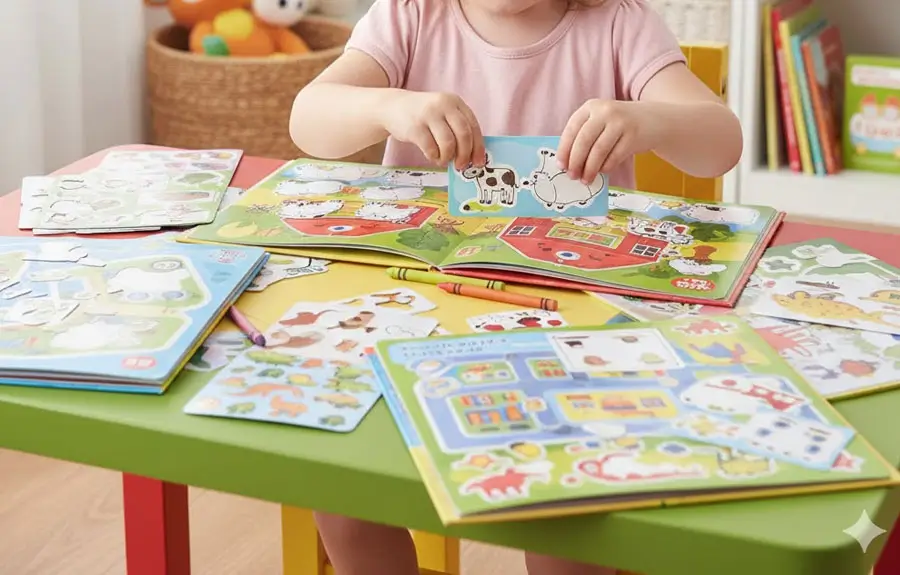
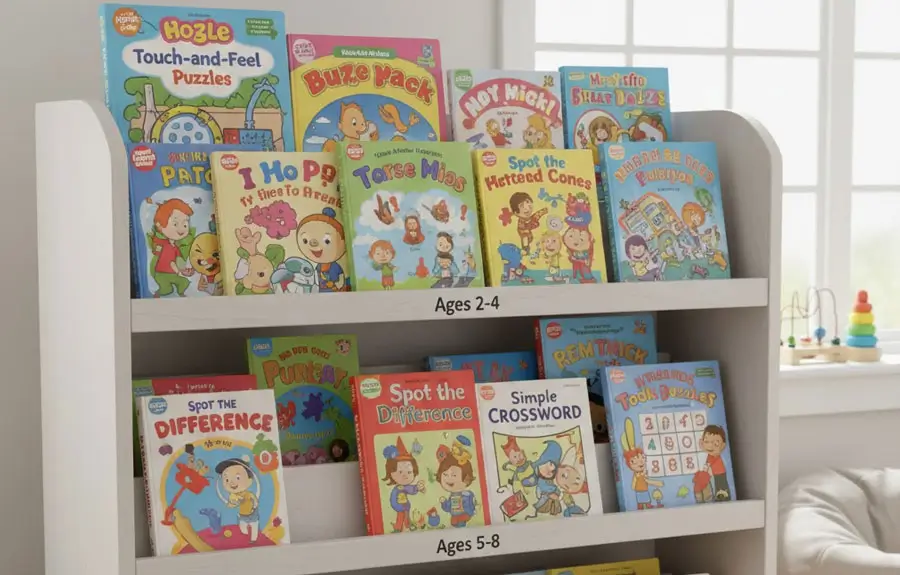
Different types of puzzle books cater to different age groups. Toddlers may enjoy simple matching and sorting puzzles, while older kids prefer logic puzzles, number challenges and pattern-based activities. Age-appropriate puzzles ensure children stay motivated and experience success at every level. When they complete a puzzle, the satisfaction boosts confidence and encourages them to take on more complex challenges.
Puzzle books are much more than entertainment tools. They support multiple developmental areas that are crucial during early childhood. As kids attempt puzzles, they practice observing details, understanding relationships between shapes, strengthening logic and following patterns. These skills help them excel in academic subjects later, especially mathematics, reading comprehension and reasoning-based activities.
Puzzle books help children:
The variety in puzzle books ensures that children learn holistically. Different puzzles activate different mental abilities, making puzzle books one of the most complete learning resources for kids.
Cognitive development includes mental processes such as thinking, understanding, remembering and solving problems. Puzzle books encourage all these processes naturally. Children must observe
puzzle pieces or illustrations carefully, understand relationships between them, store visual information temporarily and make informed decisions.
As they solve puzzles, children learn to:
These skills form the base for academic learning, especially mathematics and science. Puzzle books strengthen neural connections and help children develop a sharper memory, better reasoning and stronger decision-making abilities.
Cognitive development grows rapidly when kids regularly engage in puzzle-solving activities.
Puzzle books also strengthen physical skills that support writing readiness and daily tasks. To solve puzzles, kids must carefully move their hands while their eyes track lines, shapes or pathways. This improves fine motor skills and hand–eye coordination.
Puzzle activities such as:
require controlled movement. These tasks build finger strength, grip stability and wrist control. With continuous practice, children gain better confidence in holding pencils, drawing shapes and writing letters neatly.
Fine motor development plays an essential role in school readiness, and puzzle books offer a stress-free, enjoyable method for improving it.
Puzzle books require concentration because kids must think before completing each step. Whether identifying the missing piece or navigating a maze, puzzles teach children to stay focused without distractions. This gradually increases their attention span.
Kids also learn patience. Many puzzles require multiple attempts. Children must slow down, look carefully and think through options. They learn to accept mistakes, try again and persist until the solution appears.
These emotional skills — patience and persistence — are essential for academic success, problem-solving and overall confidence.
Puzzle Books for Ages 3–4
At this age, children are developing basic observation and motor skills. Puzzle books for this age should contain simple, bold illustrations with minimal complexity.
Best puzzle types include:
These puzzles teach toddlers to identify relationships, follow lines and recognise visual patterns. They also enhance early vocabulary and visual memory.
Puzzle books for ages 3–4 should focus on colourful, engaging themes such as animals, vehicles, fruits, toys and everyday objects.
Puzzle Books for Ages 4–5
Kids in this age range are ready for slightly more complex puzzles. Their motor skills, observation ability and reasoning are improving. Puzzle books can introduce moderate challenges.
Recommended puzzle types include:
These puzzles encourage children to analyse, compare and choose among options. Kids develop early logic skills and learn how to approach structured challenges confidently.
Themes such as nature, seasons, habitats, early learning concepts, festivals and community scenes keep children interested.
Puzzle Books for Ages 5–6
At this age, kids start understanding deeper relationships between objects, numbers and patterns. Puzzle books can now include advanced activities that sharpen reasoning.
Ideal puzzle types include:
Children at this stage are ready to experiment with trial and error. They can think ahead, predict outcomes and solve puzzles independently. Puzzle books for this age also help in early math development by introducing number patterns, comparisons and logical arrangements.
Puzzle difficulty should gradually increase to keep kids motivated and challenged.
Logical reasoning refers to the ability to think clearly, understand rules and solve problems systematically. Puzzle books strengthen logical reasoning by encouraging children to look for connections, recognise patterns and understand sequences.
Puzzle activities such as:
teach children structured thinking. They learn to break down a problem into steps and approach it logically. This skill grows gradually but has long-term benefits for mathematics, science, coding and daily decision-making.
Puzzle books rely heavily on visual and working memory. For example, in matching puzzles, children must remember which shapes or pictures they saw earlier. Hidden picture puzzles also require memory to track details.
Memory improvements include:
These memory skills support reading comprehension, learning new concepts and performing academic tasks efficiently.
Puzzle books stimulate the mind in ways that strengthen long-term cognitive stability.
While puzzle books are structured, many activities still encourage creativity. Children imagine stories behind pictures, create solutions in unique ways and explore ideas visually.
Creative puzzle activities include:
Creativity supports emotional growth and intellectual flexibility. Kids learn that there are multiple ways to approach a problem, which shapes their thinking positively.
Puzzle books blend structured logic with imaginative exploration, giving children a balanced learning experience.
Parents should choose puzzle books based on the child’s age, interest and skill level. A good puzzle book should include:
Books should start simple and gradually increase complexity. If a puzzle book is too difficult, kids may feel frustrated. If it's too easy, they may lose interest. Matching the right difficulty is key to successful learning.
Parents play an important role in guiding puzzle activities. To make puzzle learning effective:
The goal is to build independence, patience and confidence through supportive learning.
Yes, puzzle books support reasoning, memory, motor skills and cognitive development.
Kids can start simple puzzles around age three.
They strengthen logic, sequencing and pattern recognition, which support early math.
Yes, puzzles require focus and help children develop concentration.
Tracing and matching puzzles build fine motor control needed for writing.
Puzzles boost confidence through independent problem-solving.
Themes help maintain interest and improve vocabulary.
Yes, puzzle books offer engaging, hands-on activities.
They strengthen visual and working memory through repeated tasks.
Guidance helps, but encourage independent thinking.

We offer fast delivery.

We offer E-Gift Cards.

Dedicated 24/7 support.

100% secure payment.

 My Order
  0
0