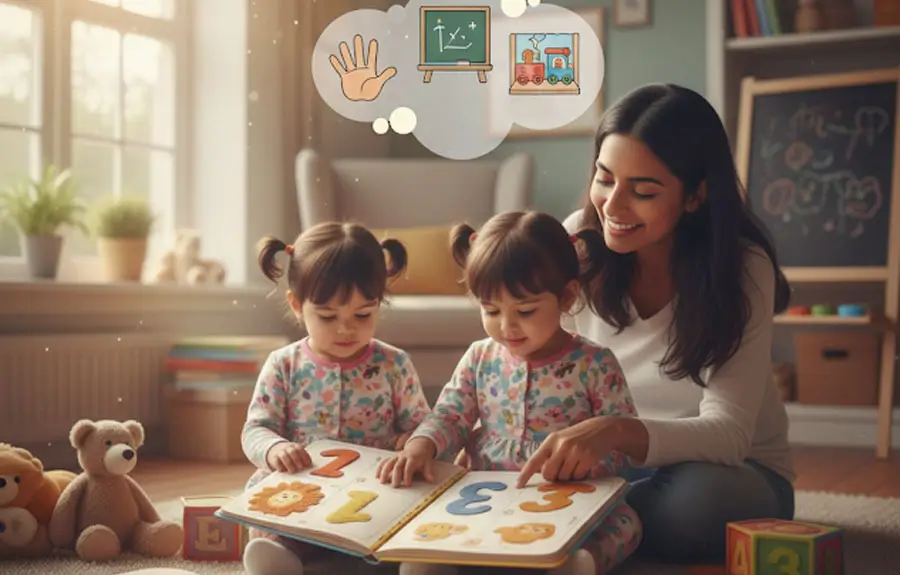
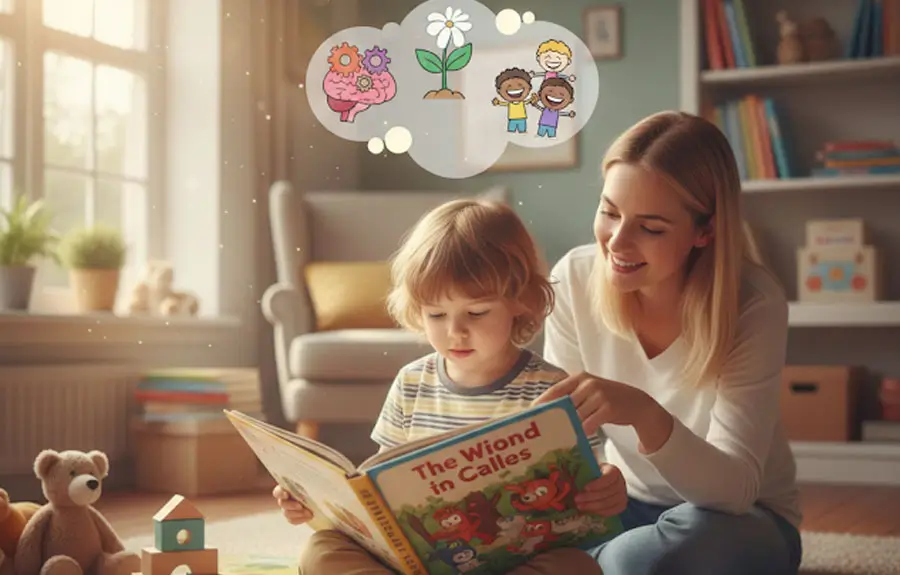
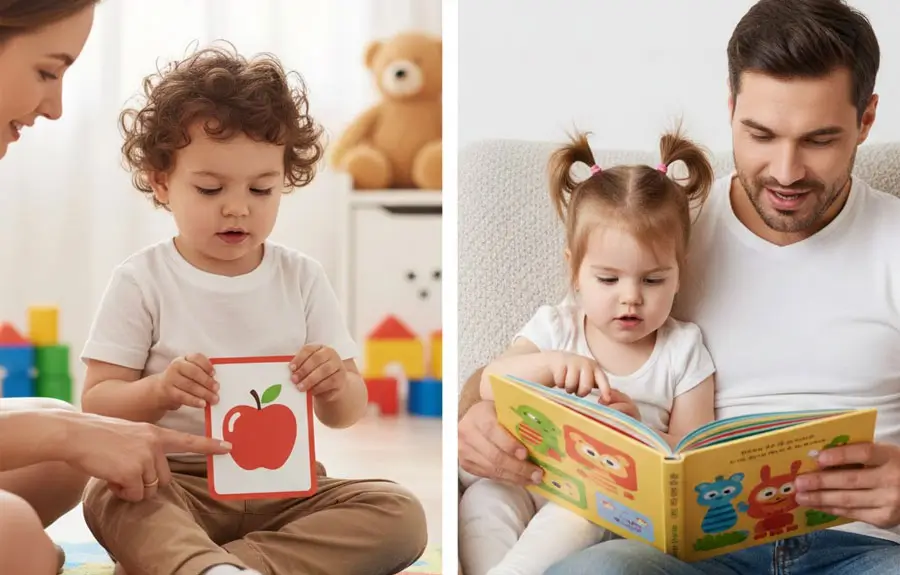
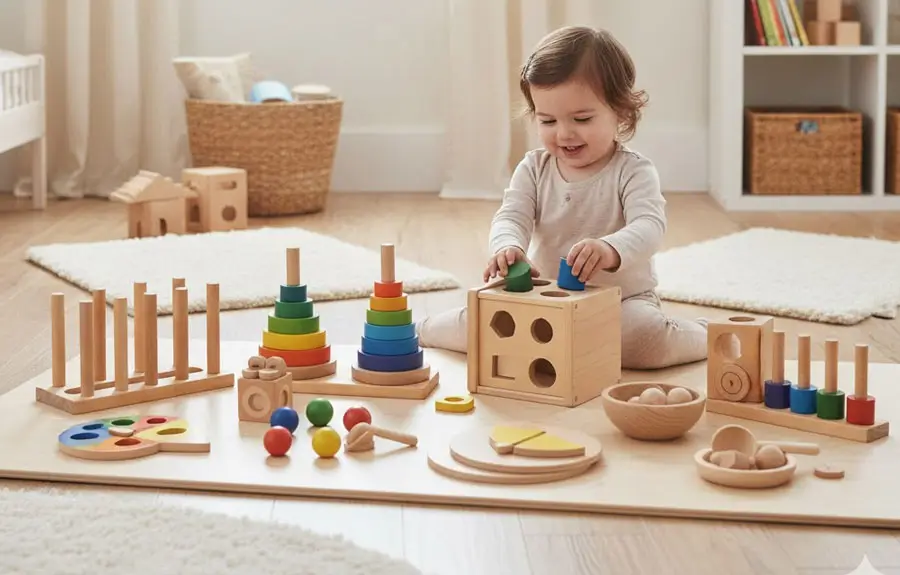
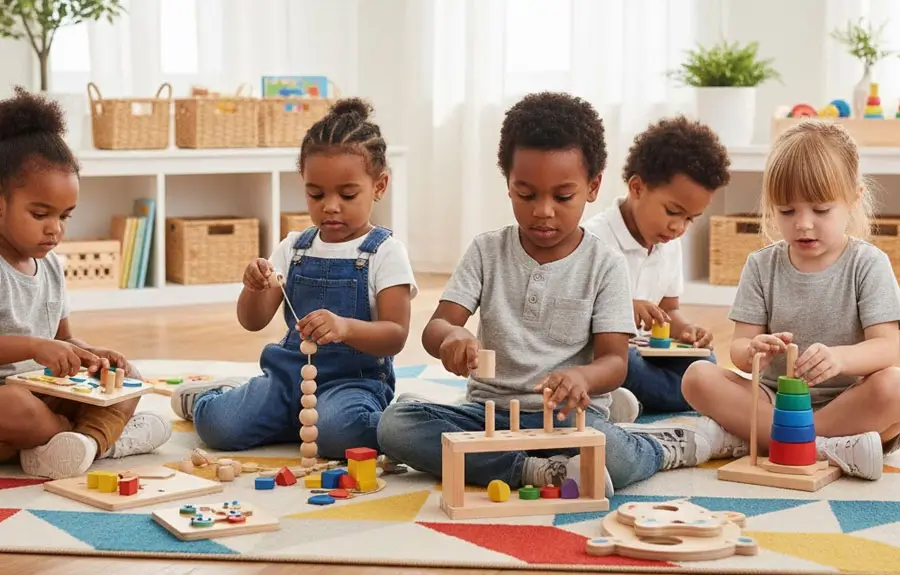
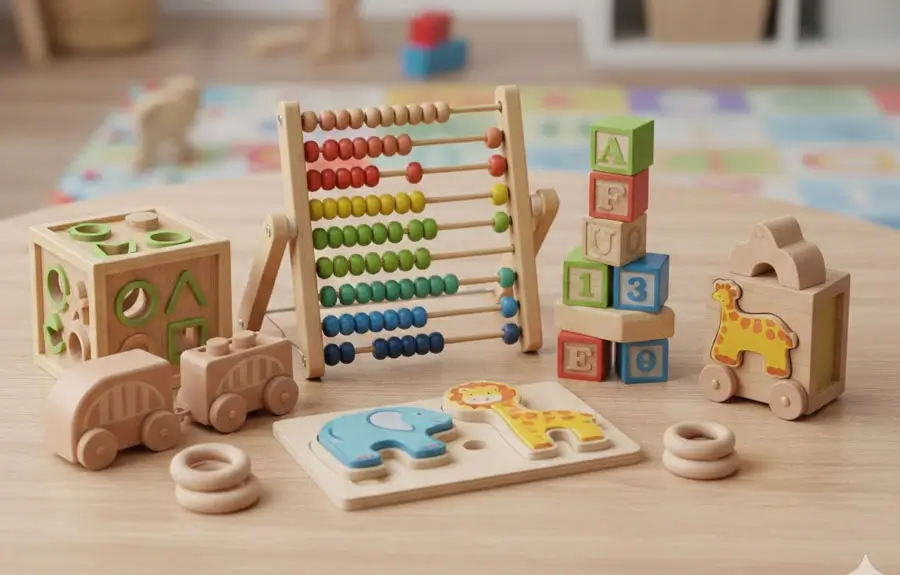
Montessori toys have become one of the most trusted tools for early childhood development. These toys are designed with a simple purpose — to help toddlers learn naturally through hands-on exploration. Unlike flashy electronic toys that overstimulate children, Montessori toys focus on sensory experiences, practical skills, movement and real-world learning. They encourage toddlers to think, touch, observe, repeat and discover abilities at their own pace. Montessori toys for toddlers support independence, concentration, fine motor development and cognitive growth while ensuring the child remains genuinely engaged.
The Montessori philosophy believes that toddlers learn best when they explore through real objects, natural materials and purposeful activities. Montessori toys are typically made of wood, designed with clean shapes, soft colours and practical functionality. This simplicity allows toddlers to focus deeply without distractions. Every toy has a specific learning purpose — whether it’s sorting, stacking, pouring, balancing or matching. These experiences activate problem-solving abilities and strengthen hand–eye coordination.
Toddlers between one to three years are in the most sensitive stage of development. Their brain absorbs information quickly, and their natural curiosity drives them to understand how things work. Montessori toys support this crucial growth phase by offering structured yet open-ended activities. They help toddlers build confidence and independence while encouraging slow, mindful play. The real power of Montessori toys lies in how deeply they engage the child, keeping them away from screens and encouraging meaningful learning.
Montessori toys are designed to match a child’s developmental needs rather than overwhelm them with entertainment. These toys promote exploration, repetition and concentration — essential building blocks for early learning. Toddlers develop stronger cognitive abilities when they use their hands and minds together. Montessori toys encourage this natural connection.
Key benefits include:
Toddlers love activities that allow them to copy real-life actions like pouring, stacking, sorting and opening. Montessori toys fulfil this desire and train toddlers to use their senses and focus deeply.
These toys also reduce overstimulation. Modern electronic toys produce lights, sounds and non-stop movement, which create dependency. Montessori toys invite children to think independently and explore at a relaxed pace.
Toddlers learn about the world by touching, smelling, hearing and observing. Montessori toys strengthen sensory skills by offering natural textures, shapes and materials. Wooden toys are especially effective because they provide warmth, weight and natural grain that stimulate sensory curiosity.
Sensory Montessori toys include:
These toys help toddlers understand size, weight, texture and spatial differences. Sensory exploration builds stronger neural connections, improves focus and prepares toddlers for early learning tasks such as writing and drawing.
Sensory play also supports emotional regulation. When toddlers touch different surfaces, move objects or explore sounds, their brain receives calming, structured input that improves self-awareness.
Montessori toys are designed to strengthen hand muscles, improve coordination and prepare toddlers for writing, eating and dressing themselves. Fine motor control is essential for daily tasks, and Montessori materials give toddlers the perfect practice.
Activities that improve fine motor skills include:
Toddlers practise grasping, pulling, pushing, twisting and balancing. These repeated movements strengthen finger control and wrist stability. Montessori toys offer purposeful challenges instead of random play. This builds precise motor habits that help toddlers become independent in daily routines.
Fine motor development supports early literacy too. Toddlers who gain better control over their hands develop smoother handwriting and more refined drawing skills later.
Montessori toys are intentionally designed to make toddlers think. They offer simple challenges that require decision-making and trial-and-error learning. Every time a toddler places a block correctly, matches a shape or fits a puzzle piece, they learn how to solve problems independently.
Montessori puzzle toys enhance:
Toddlers learn to observe, test possibilities and find solutions. They gain confidence in their thinking process and develop resilience. Problem-solving toys also help toddlers understand cause and effect — an essential concept for navigating daily life.
Hand–eye coordination improves when toddlers use toys that require visual tracking and controlled movement. Montessori toys encourage toddlers to guide their hands based on what their eyes observe, which strengthens neural integration.
Effective toys include:
These toys help toddlers follow objects visually, judge distances and predict movement. Strong hand–eye coordination improves reading readiness, sports skills and overall physical balance later in childhood.
The core of Montessori education is independence. Toddlers are encouraged to do things by themselves — touch objects, try new actions, repeat activities and explore freely. Montessori toys help toddlers feel capable and confident.
These toys encourage toddlers to:
When toddlers see that they can complete a task independently, their self-esteem grows. This self-belief translates into stronger learning habits and emotional resilience.
Montessori toys often mimic real-life activities. Toddlers enjoy copying adults and want to participate in household tasks. Practical Montessori tools help toddlers learn actions like pouring, scooping, sorting and transferring.
Practical Montessori toys include:
These activities teach toddlers discipline, direction, balance and responsibility. They also help toddlers understand basic mathematical concepts like quantity and comparison.
Below is a complete list of the most effective Montessori toys for children aged one to three. Each toy supports different developmental areas and encourages meaningful play.
Object Permanence Box
Helps toddlers understand that objects still exist even when out of sight. Builds memory, focus and cause–effect learning.
Montessori Stacker Rings
Encourages size comparison, balance and hand–eye coordination. Teaches toddlers how to organise objects purposefully.
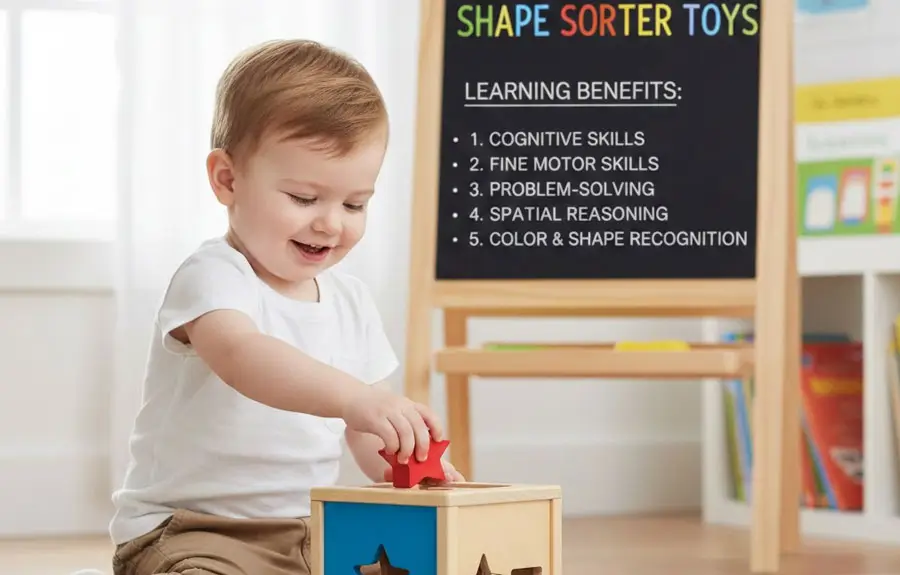
Wooden Shape Sorter
Strengthens problem-solving abilities and shape recognition. Builds grip control and visual reasoning.
Peg & Hammer Toy
Improves hand strength, precision and coordination. Helps toddlers practise controlled movement.
Cylinder Blocks
Supports depth perception, size comparison and spatial judgement. Enhances early math skills.
Pull-up Bar & Push Toys
Promote physical balance and walking confidence. Strengthen core muscles and coordination.
Sensory Texture Boards
Stimulate sensory learning through tactile exploration. Improve awareness of patterns and surfaces.
Ball Tracker / Ramp
Teaches motion, prediction and visual tracking. Excites toddlers through movement-based learning.
Nesting & Stacking Cups
Help toddlers learn size, order and volume. Provide endless variations for open-ended play.
Pincer Grip Trays
Strengthen fingers for early writing skills. Encourage precise control and fine motor refinement.
Lacing & Threading Tools
Improve patience, concentration and bilateral coordination. Perfect for hand-preparation activities.
Wooden Animal Puzzles
Support vocabulary development, shape learning and memory enhancement.
Busy Board with Locks & Latches
Encourages exploration and practical skill development. Teaches how to open, close and manipulate real objects.
Montessori Sorting Trays
Promote logical organisation, early math understanding and careful movement.
Push-In Peg Board
Enhances motor planning and pattern creation. Encourages creative thinking.
Transfer Activities (Scooping & Pouring Sets)
Strengthen wrist movement, balance and independence.
Montessori Coin Box
Teaches object placement, slot alignment and repetition-based learning.
Cause-and-Effect Drop Box
Helps toddlers understand movement, entry and exit. Encourages curiosity and prediction.
Knobbed Puzzles
Improve grip strength, visual orientation and patience. Essential for early puzzle training.
Sensory Balls
Enhance tactile awareness, coordination and movement exploration.
Parents play an important role in guiding toddlers through Montessori play. These toys work best when used in a calm, organised environment.
Helpful strategies include:
Montessori toys should invite calm, focused and meaningful play. Parents must allow toddlers to learn at their own pace.
Yes, Montessori toys encourage independent thinking without overstimulation.
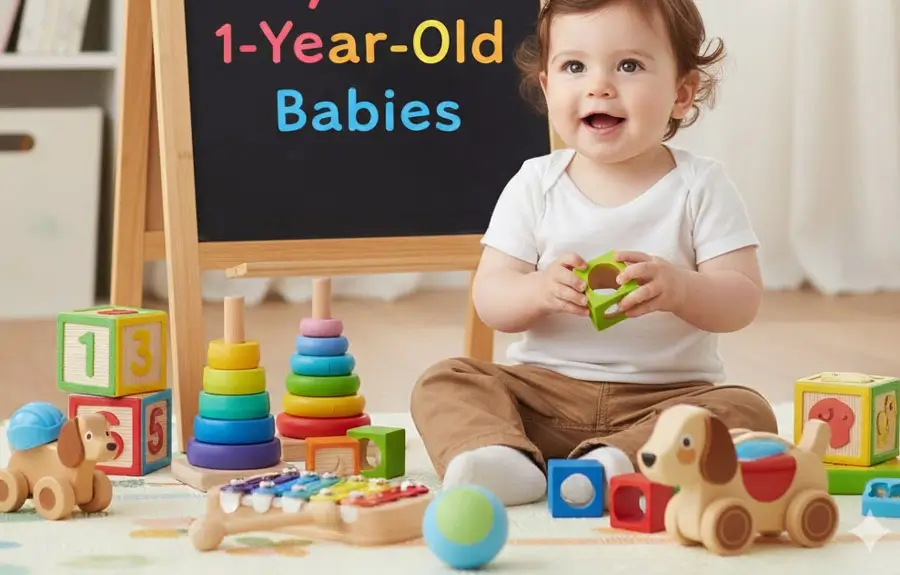
Toddlers can begin Montessori play from around one year old.
Yes, they strengthen grip, dexterity and hand–eye coordination.
Toys that involve naming objects help improve vocabulary.
They keep children deeply engaged, reducing interest in screens.
High-quality wooden toys are durable, non-toxic and child-friendly.
Minimal guidance helps, but independence should be encouraged.
Some are premium, but simple wooden toys are equally effective.
Yes, toddlers gain confidence through independent achievements.
They encourage analysis, trial and error and logical thinking.

We offer fast delivery.

We offer E-Gift Cards.

Dedicated 24/7 support.

100% secure payment.

 My Order
  0
0