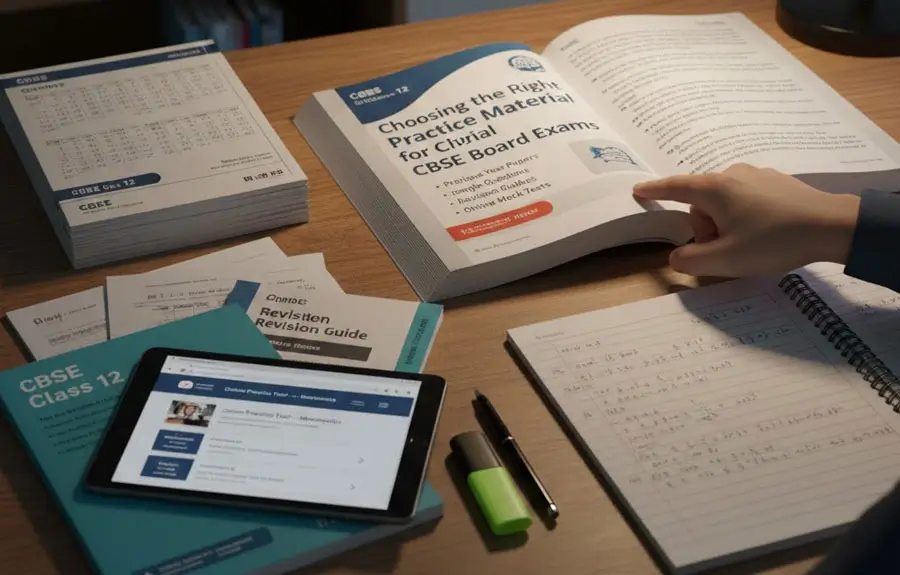
CBSE board exam preparation is not only about completing the syllabus but also about choosing the right practice material at the right time. Among the most commonly used resources are CBSE sample papers and CBSE previous year question papers. Students often feel confused about which one should be practiced first and how to use both effectively.
Both types of papers play an important role in preparation, but their purpose, timing, and impact on performance are different. Understanding these differences helps students build a strong exam strategy instead of practicing randomly.
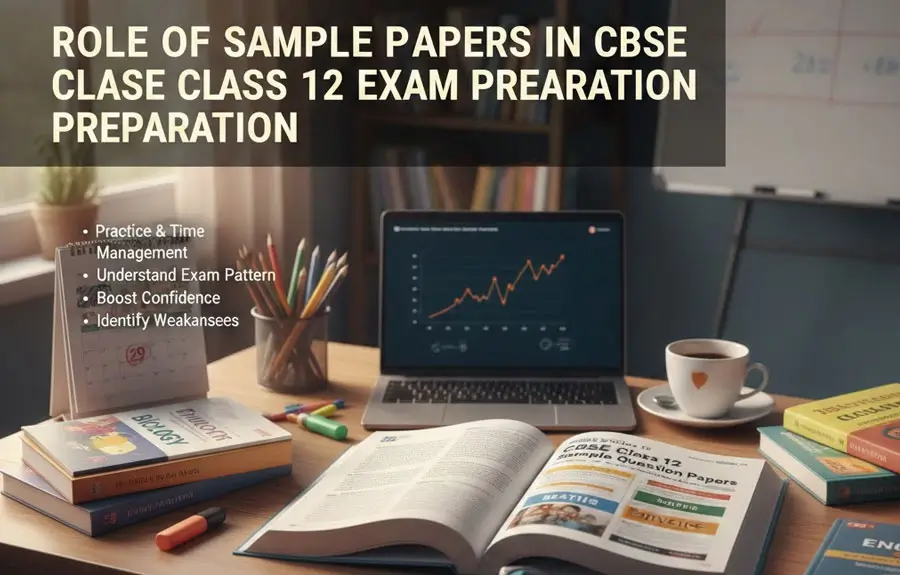
Practice papers help students move from learning concepts to applying them in exam conditions. They train students to manage time, structure answers, and handle pressure.
However, not all practice papers serve the same purpose. CBSE sample papers are designed to reflect the current exam pattern, while previous year papers show how questions were asked in the past.
Knowing when to use each one is essential for effective preparation.
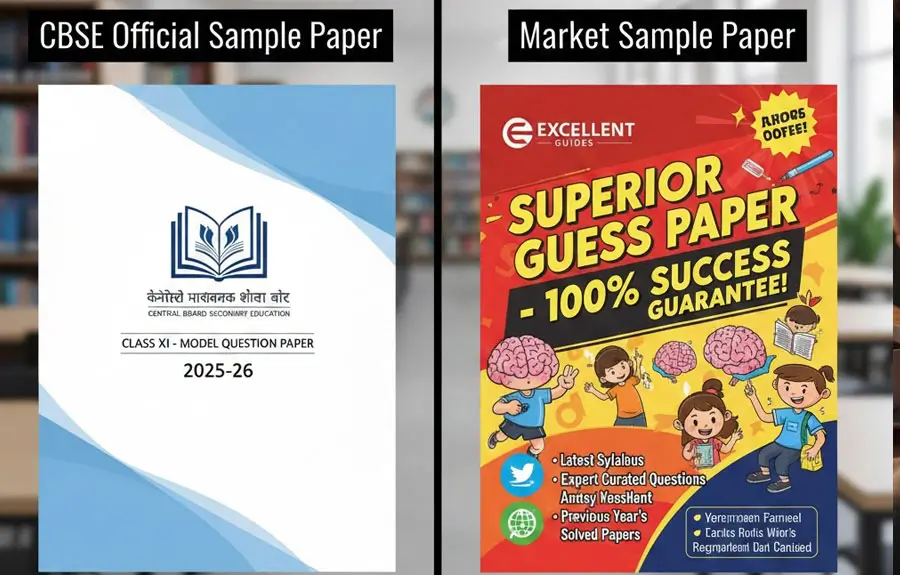
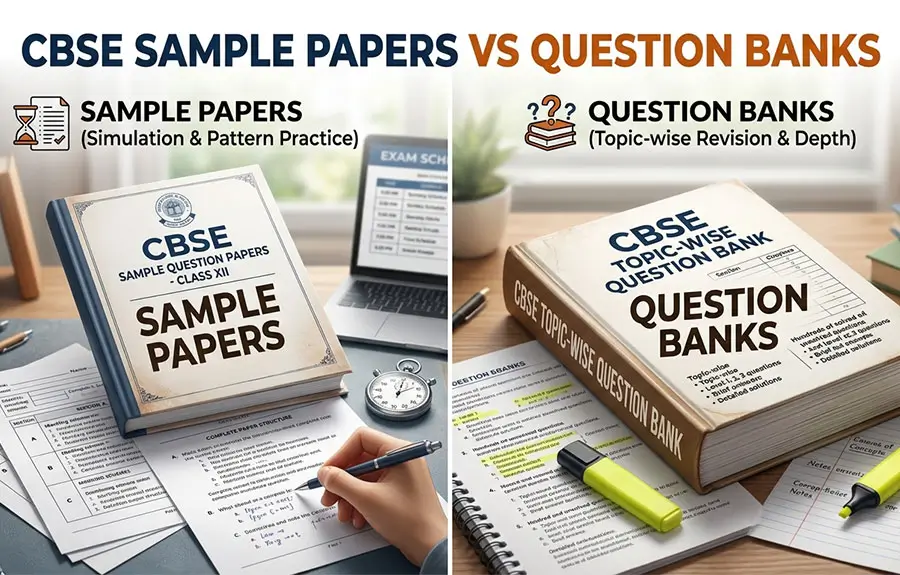
CBSE sample papers are model question papers released by the board or designed according to the latest syllabus and blueprint. They reflect the most recent exam pattern, question types, and mark distribution.
Sample papers are forward-looking. They help students understand how the board expects questions to be framed and how answers should be presented.
These papers are especially useful for understanding competency-based questions, case-study formats, and internal choices.
CBSE previous year papers are actual board exam papers conducted in past years. They provide insight into how questions were asked earlier and what type of topics were emphasized.
Previous year papers are backward-looking. They help students identify recurring themes, frequently asked concepts, and traditional question styles.
They are valuable for understanding how theory has been tested historically.
The fundamental difference lies in intent. CBSE sample papers are predictive and pattern-oriented, while previous year papers are trend-oriented.
Sample papers align preparation with current board expectations. Previous year papers help students understand examiner mindset and topic repetition.
Both are useful, but their timing in preparation makes a significant difference.
During the early and middle stages of preparation, students need clarity on exam structure. CBSE sample papers provide this clarity.
They help students understand question distribution, internal choices, and marking weightage. Early exposure to sample papers prevents surprises later.
Sample papers also help students practice newly introduced question formats.
Board exams evolve over time. Question styles, internal choices, and assessment focus change gradually.
CBSE sample papers reflect these changes accurately. Practicing them early ensures that students are aligned with the current exam framework rather than outdated patterns.
This alignment improves confidence and relevance of preparation.
While sample papers show the current pattern, previous year question papers reveal how concepts have been tested repeatedly.
They help students identify important chapters and frequently tested areas. This insight is useful for prioritizing revision.
Previous year papers also help students understand the level of depth expected in answers.
Solving CBSE previous year papers helps students evaluate whether their conceptual understanding is strong enough to handle board-level questions.
If students struggle with questions from past papers, it indicates gaps in preparation that need attention.
Previous year papers act as reality checks during preparation.
In most cases, CBSE sample papers should be practiced before previous year papers. Sample papers introduce students to the current exam pattern and expectations.
Once students are comfortable with the pattern, they can use previous year papers to reinforce learning and understand trends.
This sequence ensures structured and stress-free preparation.
Sample papers train students to attempt full-length papers under exam conditions. They improve speed, accuracy, and answer structuring.
Practicing CBSE sample papers helps students learn how to allocate time across sections and handle internal choices wisely.
This practice builds exam temperament and reduces anxiety.
Previous year papers give students a sense of familiarity. Knowing that similar questions have appeared before builds confidence.
Solving CBSE previous year papers reassures students that syllabus-based preparation is effective.
This confidence helps students perform better under pressure.
One common mistake is relying only on previous year papers. This can lead to misalignment with the current exam pattern.
Another mistake is solving sample papers without analyzing mistakes. Practice without analysis limits improvement.
Students should use both resources thoughtfully.
The most effective strategy is to combine both resources. Sample papers guide preparation, while previous year papers strengthen understanding.
Students should begin with CBSE sample papers, then gradually include previous year papers as exams approach.
This combination ensures balanced preparation.
Evaluation is more important than the number of papers solved. Students should review answers carefully after each paper.
Understanding why marks were lost helps improve future performance. Teacher feedback further enhances learning.
Evaluation turns practice into progress.
Both sample papers and previous year papers improve time management. Sample papers teach ideal time allocation, while previous year papers test adaptability.
Practicing under timed conditions builds speed and efficiency.
Strong time management increases overall exam confidence.
Different subjects may require different emphasis. For subjects with evolving patterns, sample papers are more important.
For subjects with stable theory-based questions, previous year papers provide valuable insights.
Understanding subject-wise needs improves preparation quality.
Solving too many papers in a short time can cause fatigue. Quality practice with proper gaps for revision is more effective.
Students should maintain a balanced schedule including revision, practice, and rest.
Sustainable preparation improves retention.
Teachers help students decide when to use sample papers and when to shift focus to previous year papers.
Guided practice prevents confusion and ensures alignment with board expectations.
Teacher insights add clarity to preparation strategy.
Confidence grows when students feel familiar with exam patterns and question styles.
Practicing CBSE sample papers builds structure, while previous year papers build reassurance.
Together, they create a strong mental framework for exam success.
Learning how to choose the right practice material builds academic discipline.
Students develop analytical thinking, self-assessment skills, and exam awareness.
These skills remain valuable beyond board exams.
Sample papers reflect current patterns, while previous year papers show past exam trends.
Sample papers should generally be practiced first.
Yes, they help understand recurring topics and difficulty levels.
Official sample papers closely align with board expectations.
Yes, exam patterns may change over time.
Start with sample papers, then add previous year papers later.
Yes, timed practice improves exam readiness.
Yes, evaluation helps identify and correct mistakes.
Yes, familiarity improves confidence and calmness.
Yes, structured practice improves accuracy and performance.

We offer fast delivery.

We offer E-Gift Cards.

Dedicated 24/7 support.

100% secure payment.

 My Order
  0
0