The Staff Selection Commission Combined Graduate Level (SSC CGL) Examination is one of the most sought-after government job examinations in India. Every year, lakhs of graduates apply for SSC CGL with the dream of securing prestigious positions in various ministries, departments, constitutional bodies, and government organizations. The examination offers excellent career opportunities, attractive salaries, job security, promotion prospects, and numerous employee benefits, making it one of the most competitive recruitment examinations in the country.
Despite the growing popularity of the examination, many first-time aspirants begin their preparation without fully understanding the SSC CGL syllabus, examination pattern, or selection process. They immediately start solving practice questions or collecting multiple books without studying the official notification. This often leads to confusion and ineffective preparation because candidates spend time on topics that carry limited importance while overlooking sections that frequently appear in the examination.
Success in SSC CGL depends on a combination of conceptual understanding, regular practice, speed, accuracy, and smart time management. Candidates who understand the examination structure from the beginning are able to organize their preparation more efficiently and avoid unnecessary distractions.
Whether you are preparing for your first attempt or planning to improve your previous performance, understanding the complete syllabus, subject-wise preparation strategy, examination stages, and selection process will help you create a focused roadmap for success.
The SSC CGL Examination follows a multi-stage recruitment process designed to evaluate a candidate's aptitude, reasoning ability, mathematical skills, English proficiency, and subject knowledge. Every stage plays an important role in determining whether a candidate progresses further in the recruitment process.
The first stage, commonly referred to as Tier-I, serves as the initial screening examination. It consists of objective-type multiple-choice questions covering General Intelligence and Reasoning, General Awareness, Quantitative Aptitude, and English Comprehension. Since questions from multiple subjects appear within a limited duration, candidates must develop both speed and accuracy to perform well.
Candidates who qualify in the first stage become eligible for Tier-II, which evaluates subjects in greater depth. Depending on the post applied for, candidates may need to appear in different papers covering advanced mathematics, English language, reasoning, computer knowledge, statistics, finance, or economics. Understanding the requirements of the preferred post becomes essential while planning preparation.
Some posts may also require additional stages such as document verification or skill-based assessments depending on the recruitment notification. Therefore, candidates should carefully review the official eligibility criteria before beginning preparation.
Unlike many descriptive examinations, SSC CGL emphasizes objective problem-solving under strict time constraints. Every question demands quick analysis, making regular practice an essential part of preparation. Simply understanding concepts without solving examination-level questions rarely produces competitive scores.
Candidates should also become familiar with the marking scheme, sectional distribution, and examination interface well before appearing for the examination. Mock tests help simulate actual examination conditions while improving confidence and reducing examination anxiety.
Understanding the complete examination structure provides clarity regarding preparation priorities and allows aspirants to allocate sufficient time to every subject according to its importance.
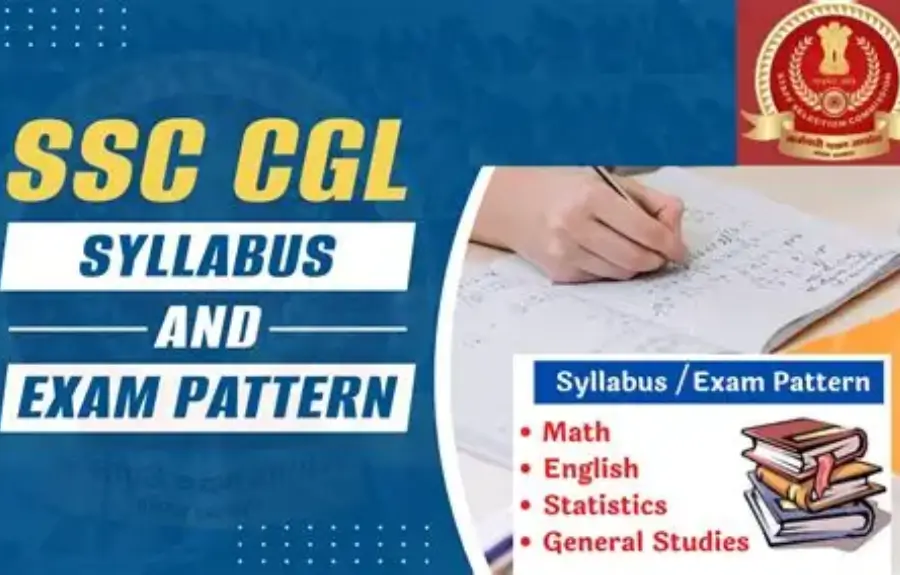
The SSC CGL syllabus covers several subjects designed to evaluate different aspects of a candidate's aptitude and general knowledge. Preparing systematically according to the syllabus helps aspirants avoid unnecessary topics while ensuring complete coverage of examination requirements.
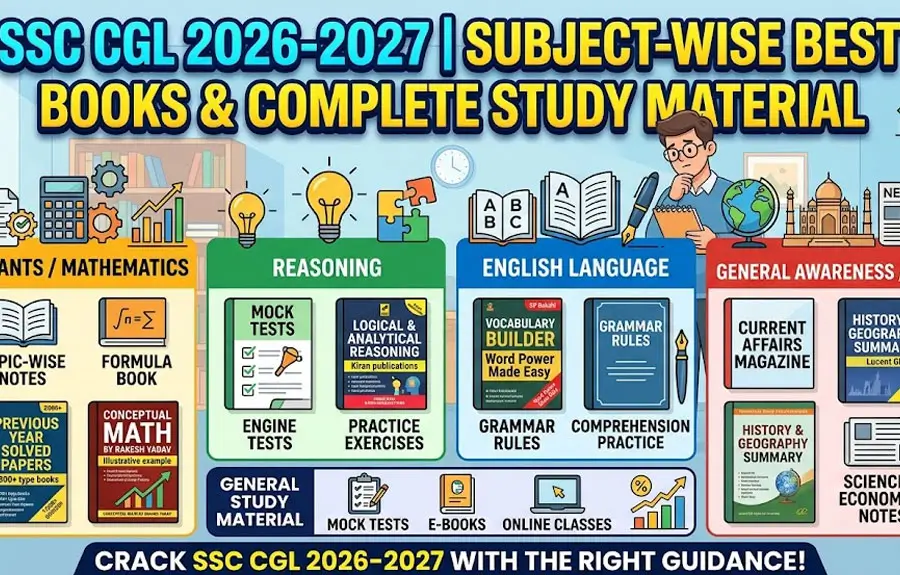
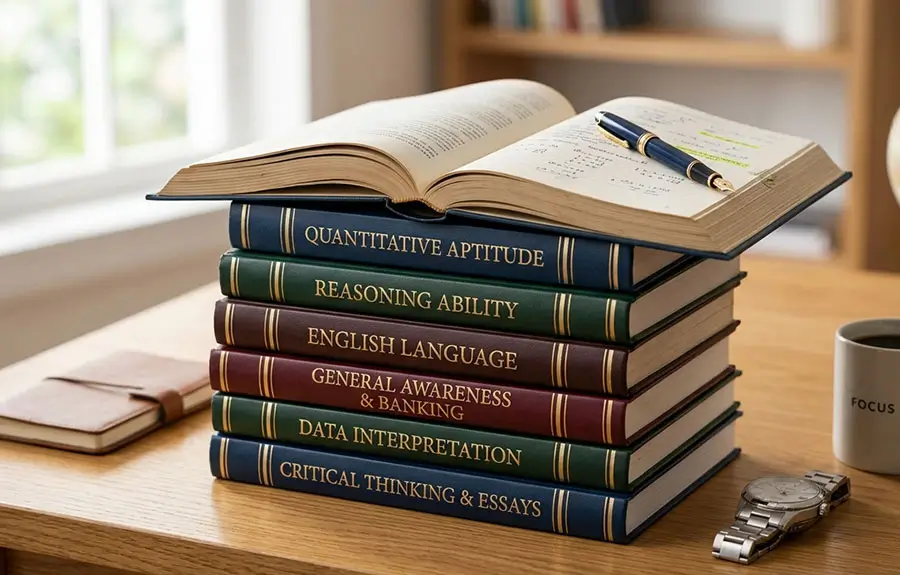
Quantitative Aptitude remains one of the most important sections of the examination. Candidates should develop strong conceptual understanding of arithmetic, percentages, profit and loss, ratio and proportion, averages, simple and compound interest, time and work, time, speed and distance, algebra, geometry, trigonometry, mensuration, statistics, and data interpretation. Regular calculation practice significantly improves both speed and accuracy.
The English Language section evaluates grammar, vocabulary, reading comprehension, sentence improvement, error detection, synonyms, antonyms, idioms, one-word substitutions, active and passive voice, direct and indirect speech, para jumbles, and comprehension skills. Reading quality newspapers and improving English vocabulary contribute significantly to performance in this section.
General Intelligence and Reasoning focuses on logical thinking and analytical ability. Candidates should practice analogy, classification, coding-decoding, series, blood relations, direction sense, puzzles, seating arrangement, syllogism, statement-based reasoning, visual reasoning, and non-verbal reasoning questions. Continuous practice remains the most effective way to improve reasoning skills.
The General Awareness section covers Indian history, geography, polity, economics, science, environment, current affairs, important government schemes, awards, sports, books and authors, national and international events, constitutional developments, and significant personalities. Rather than memorising isolated facts, candidates should develop conceptual understanding supported by regular newspaper reading.
Candidates preparing for specialized posts requiring additional papers should also study subjects such as finance, economics, statistics, or computer knowledge according to the official notification. Understanding the syllabus before selecting books helps candidates focus only on examination-relevant material instead of collecting unnecessary resources.
A balanced preparation strategy covering every subject consistently proves more effective than concentrating exclusively on personal strengths while ignoring weaker sections.
Understanding the SSC CGL Selection Process is just as important as studying the syllabus. Many aspirants focus only on subject preparation without knowing how the recruitment process works. A clear understanding of every stage helps candidates prepare according to the actual examination requirements and avoid unnecessary confusion.
The recruitment process generally begins with the Tier-I Examination, which serves as the first screening stage. Candidates who achieve the required cut-off marks become eligible for the next stage of the recruitment process. Since thousands of applicants compete for a limited number of vacancies, even a small improvement in accuracy can make a significant difference.
The second stage, Tier-II, is considered the most important phase because it carries greater weight in determining the final selection for many posts. This stage evaluates a candidate's ability to solve advanced questions related to Quantitative Aptitude, English Language, Reasoning, General Awareness, and other subjects depending on the post selected. Candidates applying for specialized positions may also need to prepare additional subjects such as Statistics, Finance, Economics, or Computer Knowledge.
After successfully qualifying in the examination stages, shortlisted candidates proceed to Document Verification, where educational qualifications, identity proof, category certificates, and other required documents are verified according to the recruitment notification.
Certain posts may also require Skill Tests or Data Entry Tests, depending on the nature of the position. These assessments evaluate practical abilities rather than theoretical knowledge and are generally qualifying in nature.
The final selection is based on merit, examination performance, eligibility criteria, document verification, and post preferences submitted by the candidate. Therefore, aspirants should remain equally attentive to every stage instead of concentrating only on the written examination.
Preparing for SSC CGL requires a balanced strategy that combines conceptual learning with continuous practice. Unlike examinations that focus primarily on descriptive answers, SSC CGL rewards candidates who can solve objective questions accurately within limited time. Speed, precision, and consistency therefore become equally important.
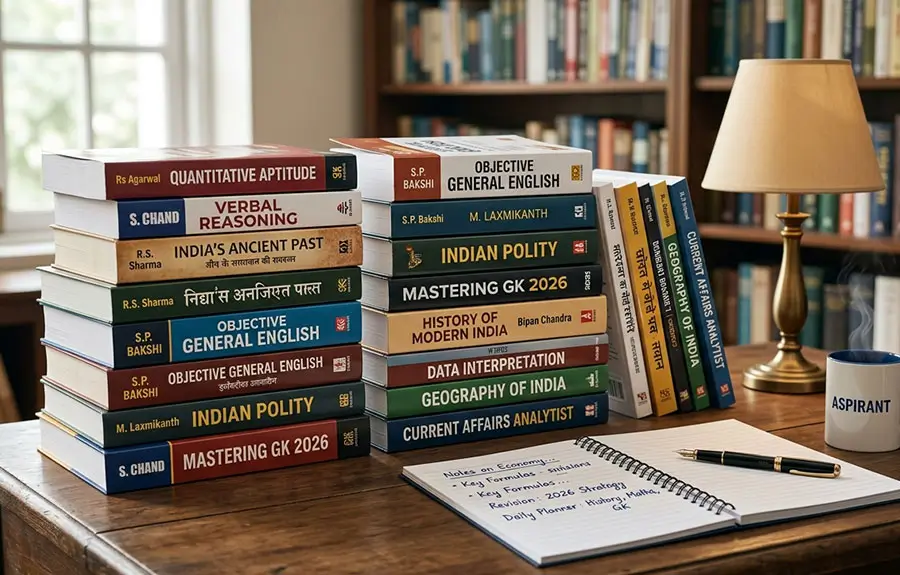
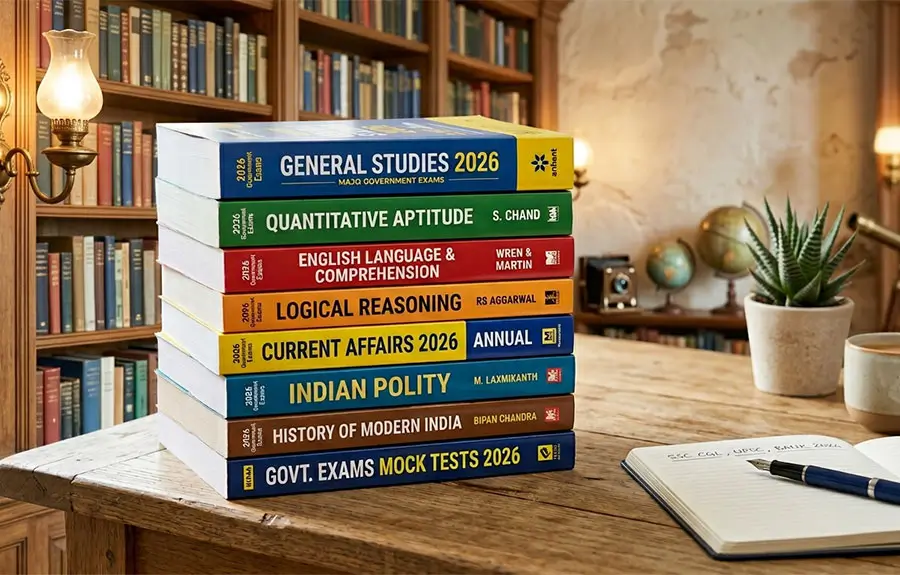
The first step is understanding the syllabus thoroughly before selecting study material. Every chapter should be studied according to the official syllabus rather than random online recommendations. Once the syllabus is understood, candidates should choose a limited number of reliable books instead of purchasing multiple resources for the same subject.
Quantitative Aptitude requires daily practice because mathematical calculations improve only through repetition. Candidates should solve questions covering arithmetic, algebra, geometry, trigonometry, mensuration, and data interpretation regularly to improve both speed and confidence.
The English Language section demands continuous improvement rather than last-minute preparation. Reading newspapers, learning English vocabulary, practicing grammar exercises, solving comprehension passages, and revising synonyms, antonyms, idioms, and one-word substitutions should become part of the daily routine.
For General Intelligence and Reasoning, regular problem-solving remains the most effective approach. Questions involving analogy, coding-decoding, blood relations, puzzles, series, syllogism, and logical reasoning become easier through continuous practice rather than memorization.
The General Awareness section should combine static subjects with current affairs. Reading quality newspapers, following important government schemes, understanding constitutional developments, economic updates, scientific discoveries, and national as well as international events helps build strong conceptual understanding.
Preparing short revision notes during the first reading significantly reduces revision time later. Instead of rereading complete books before the examination, candidates can revise concise notes containing formulas, important facts, grammar rules, constitutional articles, and current affairs.
Consistency should remain the primary objective. Studying regularly for several months always produces better results than occasional intensive preparation.
Many aspirants prepare sincerely but fail to achieve expected results because of avoidable mistakes. Understanding these common errors helps candidates improve preparation and maximize examination performance.
One of the biggest mistakes is neglecting mock tests. Many students continue reading books for months without attempting full-length examinations. As a result, they struggle with time management during the actual examination despite having adequate subject knowledge. Mock tests help candidates develop examination temperament while improving speed and accuracy.
Another frequent mistake is ignoring weaker subjects. Candidates often spend excessive time practicing subjects they already enjoy while postponing difficult topics. Since every section contributes to the overall score, balanced preparation becomes essential.
Poor revision habits create another major challenge. Reading multiple books without revisiting previously studied concepts gradually weakens retention. Revision should therefore remain a regular part of the preparation schedule rather than an activity reserved for the final weeks before the examination.
Some aspirants also depend entirely on shortcuts without understanding basic concepts. Short tricks certainly improve speed, but they become effective only after strong conceptual understanding has been developed. Memorizing techniques without understanding underlying principles often results in mistakes when question patterns change.
Current affairs are also frequently underestimated. Many candidates assume General Awareness consists only of static knowledge, while recent examinations increasingly include contemporary national and international developments. Daily newspaper reading and regular current affairs revision therefore remain essential.
Another mistake involves comparing preparation progress with other candidates. Every aspirant learns at a different pace. Consistent self-improvement should always take priority over unnecessary comparison.

Yes. Preparing concise notes for formulas, grammar rules, current affairs, important facts, and revision points makes final preparation much easier.
SSC CGL is the Staff Selection Commission Combined Graduate Level Examination, conducted to recruit graduates for various central government departments, ministries, and organizations.
The examination generally includes Quantitative Aptitude, English Language, General Intelligence and Reasoning, General Awareness, and additional subjects for specific posts.
Yes. Graduates from recognized universities who meet the eligibility criteria can apply for various SSC CGL posts.
Mock tests are extremely important because they improve speed, accuracy, time management, and examination confidence.
Quantitative Aptitude and Reasoning benefit the most from daily practice because regular problem-solving improves calculation speed and logical thinking.
Improve English vocabulary, grammar, comprehension, idioms, synonyms, antonyms, and reading skills through consistent practice and newspaper reading.
No. It includes both static subjects such as history, geography, polity, economics, science, and dynamic topics covering recent national and international developments.
Yes. Many successful candidates clear SSC CGL through disciplined self-study, quality books, mock tests, previous year papers, and regular revision.
Consistent preparation, strong conceptual understanding, regular revision, daily practice, and continuous mock test analysis remain the most important factors for achieving a competitive score.

We offer fast delivery.

We offer E-Gift Cards.

Dedicated 24/7 support.

100% secure payment.

 My Order
  0
0