Preparing for a competitive exam involves much more than reading books and solving practice questions. Every successful aspirant eventually realizes that revision plays a far greater role than simply completing the syllabus. No matter how many books are studied, success ultimately depends on how well important concepts are remembered during the examination. This is where effective note-making becomes one of the most valuable skills for every aspirant.
Many students spend months reading textbooks but struggle during revision because they have no organized material to review. Others highlight entire pages without identifying the information that truly matters. Some candidates create lengthy notebooks that are almost identical to the original books, making revision just as time-consuming as reading the complete textbook again. These approaches consume valuable preparation time while providing very little benefit.
Good notes are not copies of books. They are personalized learning resources that summarize important concepts, connect related topics, and simplify revision before the examination. Whether you are preparing for UPSC, SSC CGL, Banking Exams, Railway Recruitment, State PSC, UGC NET, Teaching Exams, or other government examinations, developing an effective note-making system can significantly improve retention and reduce revision time.
Well-prepared notes also help candidates identify knowledge gaps. While writing, students naturally analyze concepts more deeply, making it easier to understand difficult topics instead of simply memorizing them. This active learning process strengthens long-term memory and improves confidence during mock tests as well as the final examination.
The objective of note-making should never be to create attractive notebooks. Instead, the goal is to build concise, organized, and practical study material that supports repeated revision throughout the preparation journey.
The syllabus of most government exams is extensive. Candidates preparing for examinations such as UPSC Civil Services, SSC CGL, Bank PO, Railway Exams, or State Public Service Commission examinations often study subjects including History, Geography, Polity, Economy, Science, Current Affairs, Reasoning, Quantitative Aptitude, and English. Revising multiple books before the examination becomes almost impossible without well-organized notes.
Effective notes reduce this challenge by converting hundreds of pages into concise summaries containing only examination-relevant information. Instead of searching through multiple textbooks, aspirants can revise important concepts quickly while maintaining better conceptual clarity.
Writing notes also improves learning because the brain actively processes information instead of passively reading. When candidates summarize topics in their own words, they naturally understand relationships between concepts, making recall much easier during the examination.
Another advantage is flexibility. Every aspirant has different strengths and weaknesses. Personalized notes allow students to focus on topics requiring additional attention while avoiding unnecessary repetition of areas they already understand well.
Current affairs preparation also becomes easier with effective notes. Rather than collecting monthly magazines indefinitely, candidates can prepare concise summaries connecting important events with static subjects. This integrated approach proves particularly valuable for descriptive examinations where analytical understanding matters more than factual memorization.
Effective note-making ultimately transforms preparation into a structured process. Instead of repeatedly beginning from the first page of every textbook, candidates continuously revise concise, organized material that becomes increasingly valuable as the examination approaches.
Many students believe that detailed notes automatically become better notes. In reality, effective notes focus on clarity rather than length. The purpose is to reduce information without losing important concepts.
Good notes should always be written in simple language that can be understood immediately during revision. Complicated explanations copied directly from textbooks defeat the purpose of preparing notes because they require additional time to interpret.
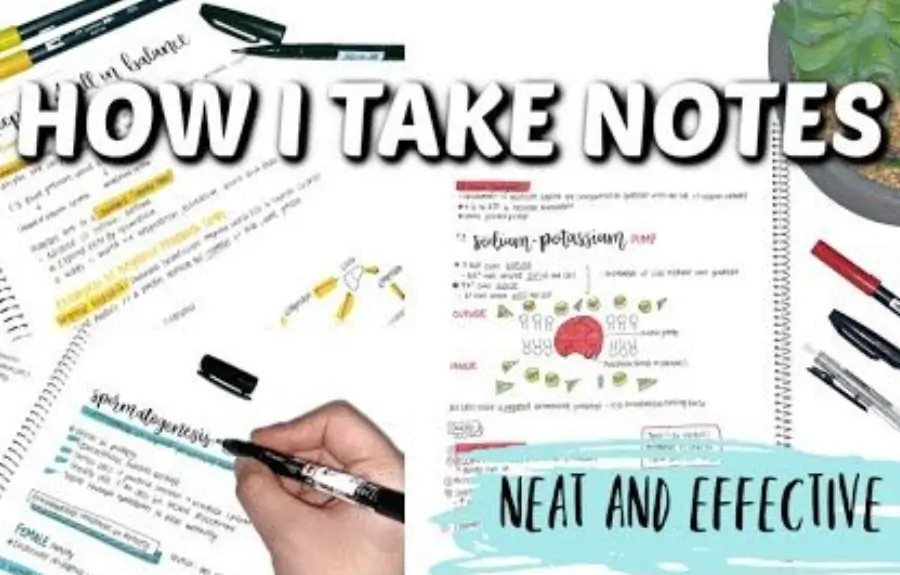
Important definitions, constitutional articles, historical events, formulas, economic concepts, geographical facts, scientific principles, and current affairs should be highlighted clearly so they become easy to locate during revision. Using headings, subheadings, keywords, diagrams, flowcharts, comparison tables, and short examples often improves readability without making notes unnecessarily decorative.
Another essential characteristic is organization. Every subject should have separate notes with logical sequencing. Mixing unrelated topics in the same notebook creates confusion during revision and wastes valuable preparation time.
Conciseness is equally important. Notes should contain only examination-relevant information. Long paragraphs copied from books should be avoided because they increase revision time without adding significant value.
Candidates should also update notes regularly. Government policies, economic developments, environmental issues, scientific discoveries, and current affairs continue changing. Adding important updates keeps notes relevant throughout the preparation period.
Finally, personalized notes always outperform borrowed notes. Writing information personally improves understanding, strengthens memory, and allows customization according to individual learning style. Even when coaching material is available, preparing personal summaries usually produces better long-term retention.
There is no single note-making technique suitable for every aspirant. The best method depends on individual learning preferences, examination requirements, and the nature of the subject being studied.
Many students prefer linear notes where important concepts are summarized under clear headings. This traditional method works particularly well for subjects such as History, Polity, Economics, and Geography, where conceptual explanations require complete sentences.
Flowcharts provide another effective method, especially for understanding administrative structures, constitutional processes, economic cycles, environmental systems, and scientific concepts. Visual representation improves memory by connecting related ideas logically.
Mind maps help organize broad topics into interconnected branches. Subjects involving multiple dimensions, such as governance, international relations, disaster management, ethics, or environmental conservation, become easier to understand through visual mapping.
Comparison tables prove useful whenever two or more concepts require differentiation. Candidates preparing Indian Polity, Economy, or Geography frequently use comparison charts to distinguish constitutional bodies, financial institutions, climatic conditions, administrative structures, and government schemes.
Formula sheets remain essential for examinations containing Quantitative Aptitude, mathematics, reasoning, or science. Keeping all formulas together significantly reduces revision time before the examination.
Digital note-making has also become increasingly popular. Many aspirants organize notes using tablets, laptops, or note-taking applications that allow keyword searching, cloud storage, and regular updates. However, handwritten notes continue to remain highly effective because the writing process itself strengthens memory and conceptual understanding.
The ideal approach often combines different methods depending on the subject. Using only one style for every topic may reduce flexibility, while selecting the most suitable format for each subject improves both learning and revision.
Many aspirants invest hours in making notes but still struggle during revision because the notes themselves are poorly organized. One of the biggest mistakes is copying complete paragraphs from textbooks. If your notebook looks almost identical to the original book, it defeats the purpose of note-making. The objective is to simplify information, not duplicate it.
Another common mistake is preparing notes before understanding the topic. Students often begin writing while reading a chapter for the first time. This usually results in unnecessary information being included because they cannot yet distinguish between important concepts and supporting details. A much better approach is to complete the topic first, understand the concepts thoroughly, and then prepare concise notes in your own words.
Many candidates also create decorative notebooks filled with colourful headings, artistic designs, and unnecessary formatting. While attractive notes may appear impressive, they rarely improve examination performance. Practical, easy-to-read notes are always more valuable than visually appealing notebooks that consume excessive preparation time.
Ignoring regular updates is another serious mistake. Subjects such as Current Affairs, Indian Economy, Environment, Government Schemes, and International Relations evolve continuously. Notes should therefore remain dynamic documents that are updated whenever important developments occur.
Some students prepare separate notes for every book they read. This creates duplication and confusion during revision. Instead, maintain one consolidated notebook for each subject where all important information is organized systematically. This approach makes final revision significantly easier.
Another common problem is never revisiting notes after writing them. Notes only become useful when revised repeatedly. Even perfectly prepared notes lose their value if they remain unopened until the final weeks before the examination.
With the increasing availability of tablets, laptops, and note-taking applications, many aspirants wonder whether handwritten notes or digital notes are more effective. Both approaches offer distinct advantages, and the best choice depends on individual learning preferences.
Handwritten notes remain highly popular because writing by hand improves concentration and memory retention. The physical act of writing forces the brain to process information actively, making concepts easier to remember during examinations. Many successful candidates continue using handwritten notebooks because they provide better long-term recall.
Another advantage of handwritten notes is flexibility. Students can easily draw diagrams, flowcharts, mind maps, tables, and quick illustrations without depending on software or formatting tools. During revision, handwritten notes often feel more personal because they reflect the individual's own learning style.
Digital notes, however, provide convenience and easy organization. They can be edited quickly, searched instantly using keywords, synchronized across multiple devices, and updated whenever new information becomes available. Candidates preparing Current Affairs often prefer digital notes because regular updates become much simpler.
Digital storage also reduces the need to carry multiple notebooks, making revision possible while travelling or during office breaks. Cloud-based applications additionally protect notes from physical damage or accidental loss.
Many aspirants achieve excellent results by combining both methods. They prepare handwritten notes for static subjects such as History, Polity, Geography, and Economics, while maintaining digital notes for current affairs, government schemes, reports, and recent developments that require frequent updates.
Ultimately, the most effective system is the one that encourages regular revision and long-term consistency rather than depending entirely on technology or traditional methods.
Different subjects require different note-making approaches. Using the same format for every topic often reduces effectiveness because each subject demands a unique style of presentation.
For Indian Polity, notes should emphasize constitutional articles, important amendments, landmark judgments, constitutional bodies, governance structures, and comparison tables explaining the powers and functions of different institutions. Flowcharts explaining legislative processes or constitutional amendments improve conceptual understanding.
While studying History, preparing chronological timelines significantly improves memory. Historical events, important personalities, freedom movements, cultural developments, and major reforms become easier to revise when arranged in sequence instead of lengthy paragraphs.
For Geography, diagrams, maps, labelled illustrations, climatic patterns, river systems, and comparison charts simplify complex topics. Visual learning proves particularly effective for geographical concepts.
Indian Economy notes should focus on definitions, important economic indicators, government policies, financial institutions, budgeting concepts, taxation, inflation, banking systems, and economic reforms. Current economic developments should be integrated with static concepts to strengthen analytical understanding.
Subjects involving General Science benefit from diagrams, labelled illustrations, scientific processes, biological systems, formulas, and concise explanations of important principles. Scientific discoveries and technological developments can be added separately during current affairs revision.
Candidates preparing English Language should maintain dedicated vocabulary notebooks containing important words, synonyms, antonyms, idioms, phrasal verbs, and sentence examples. Regular revision of these notebooks gradually strengthens language skills required for examinations.
Preparing subject-specific notes according to the nature of the syllabus not only improves revision efficiency but also enhances conceptual understanding and examination performance.
The final weeks before a competitive examination are often the most stressful period for aspirants. Attempting to revise multiple textbooks during this stage becomes almost impossible because the syllabus is too extensive. This is where effective notes become one of the greatest advantages.
Well-prepared notes allow candidates to revise complete subjects within a relatively short period without compromising conceptual understanding. Since only important examination-oriented information is included, revision becomes faster, more focused, and less overwhelming.
Repeated revision using concise notes also improves confidence. Instead of worrying about forgotten chapters, aspirants gradually realize that the entire syllabus has already been organized into manageable sections. This psychological confidence often contributes positively to examination performance.
Another benefit is quick error correction. During mock tests, candidates frequently identify weak areas or recurring mistakes. These corrections can be added directly to existing notes, ensuring that similar errors are not repeated during the actual examination.
Effective notes also simplify last-minute revision. Important constitutional articles, formulas, economic concepts, scientific facts, geographical locations, historical events, and current affairs remain available in one place instead of being scattered across multiple books.
Ultimately, the purpose of note-making is not simply to create notebooks but to build a personalized revision system that supports continuous learning throughout the preparation journey. Candidates who consistently revise well-organized notes usually approach examinations with greater confidence, stronger retention, and improved conceptual clarity.
Yes. Maintaining separate notebooks for different subjects improves organization and makes revision more efficient.
Notes simplify revision, improve memory retention, organize important concepts, and reduce the need to repeatedly read large textbooks.
It is better to understand the topic first and then prepare concise notes instead of writing everything during the initial reading.
Both methods are effective. Handwritten notes improve memory retention, while digital notes provide easy organization and quick updates.
Notes should remain concise, containing only important examination-related information instead of lengthy textbook explanations.
Yes. Maintaining dedicated Current Affairs notes makes revision easier and helps connect recent developments with static subjects.
Coaching notes are useful, but personalized notes improve understanding, retention, and revision because they reflect your own learning style.
Revision should become a regular habit throughout preparation rather than waiting until the final weeks before the examination.
Copying entire textbook paragraphs without understanding the concepts is one of the most common and least effective note-making mistakes.
Yes. Well-organized notes strengthen conceptual understanding, improve revision speed, enhance retention, and increase confidence before competitive examinations.

We offer fast delivery.

We offer E-Gift Cards.

Dedicated 24/7 support.

100% secure payment.

 My Order
  0
0